Approved Medical Supply Brands: Top 10 for Procurement

Approved medical supply brands are defined by three criteria: regulatory compliance, insurance acceptance, and documented clinical performance. Examples of approved medical supply brands include industry leaders such as Medtronic, Johnson & Johnson MedTech, and Siemens Healthineers, each recognized for quality, broad clinical adoption, and consistent regulatory standing. For purchasing managers and facility administrators, brand selection is not a preference decision. It directly determines reimbursement eligibility, clinical safety, and audit readiness. This guide lists the top certified medical supplies brands, explains what makes each one trusted, and gives you a practical framework for matching brands to your facility’s needs and budget.
1. Examples of approved medical supply brands: the top 10
The top global medical manufacturers recognized for innovation and quality include Medtronic, Johnson & Johnson MedTech, Siemens Healthineers, Abbott Laboratories, GE Healthcare, Philips Healthcare, Stryker, Boston Scientific, Becton Dickinson (BD), and Medline Industries. These ten organizations set the benchmark for approved medical equipment across surgical, diagnostic, and consumable categories worldwide.
Medtronic leads in diabetes management devices, neuromodulation systems, and minimally invasive surgical tools. Its product portfolio spans more than 150 countries, making it one of the most widely accepted brands in formulary and insurance lists.
Johnson & Johnson MedTech covers surgical robotics, orthopedic implants, and intervention technologies. Facilities that perform high-volume orthopedic or cardiovascular procedures consistently rely on J&J MedTech for leading surgical equipment options.
Siemens Healthineers dominates diagnostic imaging and laboratory diagnostics. Its MRI, CT, and point-of-care testing systems are standard in large hospital networks and academic medical centers.
Abbott Laboratories specializes in cardiovascular devices, continuous glucose monitors, and rapid diagnostics. Abbott’s FreeStyle Libre system is one of the most prescribed continuous glucose monitors in the United States.
GE Healthcare provides imaging systems, ultrasound platforms, and patient monitoring equipment. Its connected care infrastructure makes it a preferred brand for integrated health systems.
Philips Healthcare focuses on imaging, sleep therapy, and connected patient monitoring. Philips is particularly strong in respiratory care, a category where oxygen devices and humidifiers account for a combined 64.6% of durable medical equipment orders.
Stryker is the standard reference for orthopedic implants, surgical navigation, and minimally invasive solutions. Its instruments and trays are found in operating rooms across virtually every major U.S. health system.
Boston Scientific covers cardiovascular intervention, electrophysiology, and endoscopy. Its devices are routinely included on approved vendor lists for cardiac catheterization labs.
Becton Dickinson (BD) produces diagnostic systems, infusion therapy products, and consumables such as syringes and needles. BD’s scale and consistency make it a default choice for hospital supply chain managers.
Medline Industries is the largest privately held medical manufacturer in the United States, producing hospital essentials, PPE, wound care products, and textiles with reliable global distribution.
2. How insurance and reimbursement policies shape approved brand lists
Insurance restrictions are the most underestimated driver of brand approval in clinical procurement. Aetna Medicare restricts reimbursement to specific brands like Accu-Chek and TRUE for blood glucose meters. Non-approved brands require separate prior authorization, which delays patient care and creates billing risk for the facility.
This means “approved” status is not purely a clinical designation. Payer formularies and Medicare national coverage determinations carry equal or greater weight in day-to-day procurement decisions. A brand can be clinically excellent and still generate denied claims if it falls outside the payer’s preferred list.
Formulary restrictions under Medicare and private insurance contracts can prevent billing for non-preferred brands entirely. Purchasing managers who skip this verification step expose their facilities to retroactive claim denials and compliance audits.
Pro Tip: Before adding any new brand to your approved vendor list, cross-reference it against your top three payers’ DME formularies. A 15-minute check at onboarding prevents months of billing disputes.

The practical solution is to build a payer-specific approved brand matrix and update it at each contract renewal cycle. Map each product category to the brands your top payers accept, and flag any substitutions that require pre-authorization. This process protects both reimbursement and clinical continuity.
3. Quality standards and certifications that define reliable healthcare brands
Brand name alone does not guarantee product safety or regulatory standing. The FDA does not grant blanket approval to entire brands. Instead, individual medical devices receive FDA clearance or registration under quality system regulations. Procurement teams that rely on marketing claims rather than product-level clearance documentation create compliance gaps that surface during Joint Commission surveys.
Three regulatory distinctions matter most for purchasing decisions:
FDA registered means the manufacturer’s facility is listed with the FDA. Registration does not indicate product review or approval. It is the baseline requirement, not a quality signal.
FDA cleared (510k) means the device has been reviewed and found substantially equivalent to a legally marketed predicate device. This is the standard for most Class II medical devices, including surgical instruments and diagnostic equipment.
FDA approved (PMA) applies to Class III high-risk devices such as implantable cardiac devices and certain diagnostics. PMA approval requires clinical trial evidence. It is the highest regulatory bar.
For consumables such as gloves and masks, Acceptable Quality Limits (AQL) and compliance documentation are more reliable quality indicators than brand recognition alone. AQL testing defines the maximum defect rate acceptable in a production batch. A glove supplier with a documented AQL of 1.5 or lower meets the standard required for surgical use. A supplier without published AQL data is a procurement risk regardless of brand familiarity.
Supplier accreditation and licensure are distinct categories. A distributor may hold general accreditation but lack the state pharmacy board license required for insurance-covered orders in specific regions. Request current licensure documents during vendor onboarding. This single step prevents claim invalidation down the line.
4. One-stop sourcing platforms vs. multiple suppliers: which works better?
The sourcing model you choose affects cost, compliance, and operational complexity in ways that compound over time. The table below compares the two primary approaches for procuring top medical supply brands.
Factor | One-stop sourcing platform | Multiple specialized suppliers |
Vendor count | Reduced by up to 60% | Higher, requires more management |
Bulk pricing | Significant savings available | Varies by supplier and volume |
Clinical training | Simplified, consistent brand ecosystem | Complex, multiple training tracks |
Compliance documentation | Centralized, easier to audit | Distributed, harder to track |
Product range | Broad but may lack niche items | Deep in specialty categories |
Risk exposure | Concentrated in one vendor | Diversified across vendors |
One-stop sourcing platforms can reduce vendor counts by up to 60%, simplify clinical training, and deliver bulk purchasing savings. That reduction in vendor complexity translates directly to lower administrative overhead and fewer compliance gaps. For facilities managing 500 or more SKUs, the operational case for consolidated sourcing is strong.
The trade-off is concentration risk. If a single distributor faces a supply chain disruption, the facility has fewer backup options. The practical answer is a hybrid model: consolidate commodity and high-volume consumable purchasing through one primary platform, and maintain two or three specialty suppliers for niche or high-risk categories.
Pro Tip: When evaluating a consolidated sourcing partner, request a vendor scorecard showing on-time delivery rates, return rates, and compliance documentation response times. These metrics predict operational reliability better than catalog size.
For facilities exploring efficient surgical supplies sourcing, the one-stop model offers the clearest path to cost control without sacrificing brand quality.
5. Matching approved brands to facility type and budget
Not every facility needs Stryker implants or Siemens imaging systems. The right brand depends on your facility’s clinical scope, patient volume, and payer mix.
Specialized surgical and diagnostic centers should prioritize premium brands with documented R&D investment and comprehensive product support ecosystems. KLS Martin Group defines reputable surgical brands as those maintaining consistent innovation and comprehensive support for instruments, trays, and storage. For high-acuity procedures, the cost of a brand failure far exceeds any price difference at procurement.
Long-term care and general practice facilities benefit from cost-effective but fully certified brands. Medline Industries, for example, provides hospital-grade PPE, wound care, and textiles at price points accessible to smaller facilities without sacrificing compliance documentation.
Ambulatory surgery centers and outpatient clinics often operate under tight margins. For these settings, BD’s consumable lines and Abbott’s rapid diagnostics offer insurance-accepted, FDA-cleared options at competitive price points.
Home health and DME providers face the strictest payer-driven brand restrictions. Oxygen devices and accessories represent 33.3% of total DME provider orders. Selecting brands outside the payer’s approved list in this category creates immediate billing exposure.
Balancing innovation, compliance, and cost requires a tiered approach. Classify your product categories by clinical risk and reimbursement sensitivity. Apply premium brand standards to high-risk and high-reimbursement categories. Apply cost-efficiency criteria to low-risk consumables where multiple certified options exist. You can also explore wholesale medical purchasing benefits to reduce per-unit costs on high-volume approved brands.
Key takeaways
Approved medical supply brands are determined by regulatory clearance, insurance formulary inclusion, and documented quality standards, not brand recognition alone.
Point | Details |
Top brands by category | Medtronic, BD, Medline, Stryker, and Abbott cover the broadest range of approved categories. |
Insurance drives approval | Payer formularies like Aetna’s DME list determine which brands are billable, not just clinical preference. |
FDA clearance vs. approval | Verify product-level FDA clearance or PMA status; registration alone is not a quality signal. |
AQL for consumables | Request AQL documentation for gloves and masks; a score of 1.5 or lower meets surgical standards. |
Sourcing model matters | Consolidated sourcing can cut vendor counts by up to 60% and reduce compliance complexity. |
Why brand selection is a compliance decision, not just a purchasing one
I have reviewed procurement files from facilities that lost reimbursement on thousands of dollars in DME claims because a purchasing manager switched glucose meter brands without checking the payer formulary. The brand was FDA cleared. The product worked. The claims were still denied. That experience shaped how I think about approved brand selection permanently.
The industry tends to treat brand approval as a clinical or quality question. It is actually a compliance question first. The moment a product leaves your approved brand list and enters a gray zone with even one major payer, you have created a billing liability that your clinical team will never see coming. By the time the denials surface, the purchasing decision is months old and the documentation trail is cold.
What I find most procurement managers underestimate is how frequently approved brand lists change. Payer contracts renew annually. Formularies shift. A brand that was fully reimbursable in 2025 may require prior authorization in 2026 under a renegotiated contract. The facilities that stay ahead of this build a quarterly review cycle into their procurement calendar, not an annual one.
My recommendation: treat your approved brand matrix as a living document. Assign ownership to a specific role, not a committee. Committees review; individuals act. The facilities with the cleanest reimbursement records I have seen all share one trait. One person owns the approved vendor list and is accountable for keeping it current.
— QB
Source your approved brands through Queenssurgical
Queenssurgical is a trusted online distributor serving healthcare facilities, clinics, and purchasing organizations across the Americas with verified, competitively priced medical supplies.
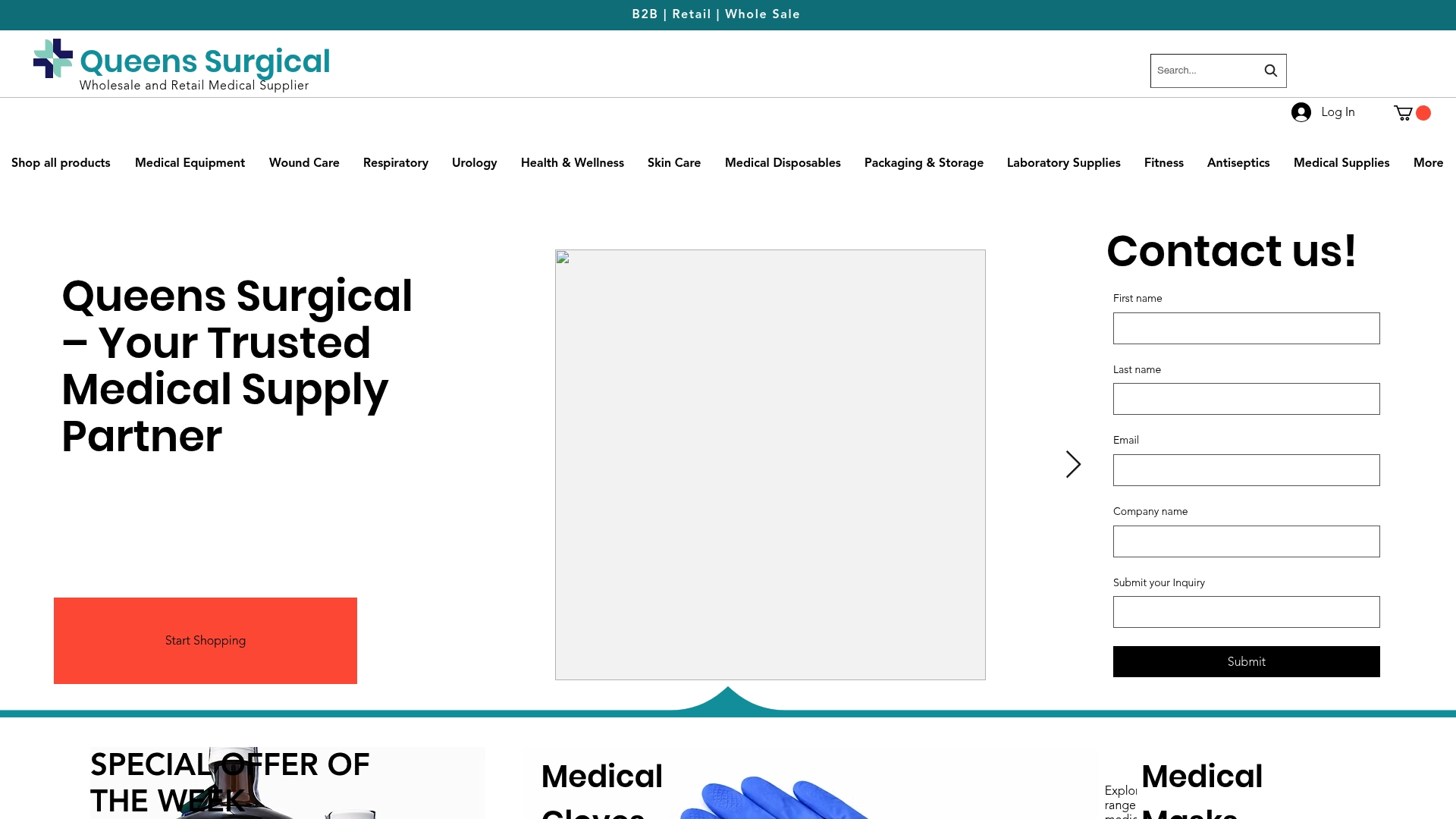
The platform carries products across surgical instruments, gloves, masks, diagnostic equipment, and wellness supplies, all sourced from recognized brands that meet industry standards. Whether you are stocking a surgical center or managing consumable procurement for a long-term care facility, Queenssurgical offers both wholesale and retail options with straightforward ordering. Explore the full catalog at Queenssurgical to find approved brands that match your facility’s clinical and compliance requirements.
FAQ
What are the most recognized approved medical supply brands?
Medtronic, Johnson & Johnson MedTech, Siemens Healthineers, Abbott Laboratories, Stryker, and Becton Dickinson are among the most widely recognized approved medical supply brands globally. These companies are benchmarked for facility standards across surgical, diagnostic, and consumable categories.
Does FDA approval apply to entire medical supply brands?
No. The FDA does not grant blanket approval to entire brands. Individual devices receive FDA clearance or registration, so procurement teams must verify product-level regulatory status rather than relying on brand-wide marketing claims.
How do insurance policies determine which brands are approved?
Payer formularies, such as Aetna Medicare’s DME approved brand list, restrict reimbursement to specific brands like Accu-Chek for glucose meters. Purchasing non-formulary brands without prior authorization results in denied claims regardless of clinical merit.
What quality certifications should I verify for consumable medical supplies?
For consumables like gloves and masks, verify Acceptable Quality Limits (AQL) documentation and FDA clearance status. An AQL rating of 1.5 or lower is the standard for surgical-grade consumables and is a more reliable quality indicator than brand name alone.
Is one-stop sourcing better than using multiple medical supply vendors?
Consolidated sourcing through a single platform can reduce vendor counts by up to 60% and simplify compliance documentation. However, maintaining two or three specialty suppliers alongside a primary distributor reduces concentration risk for critical or niche product categories.
Recommended
Comments