Diagnostic Tools in Patient Assessment: 2026 Clinical Guide

Diagnostic tools are defined as any instrument, test, or procedure used to identify disease, evaluate patient condition, or guide treatment decisions. The role of diagnostic tools in patient assessment is foundational to modern medicine. Diagnostic tools influence approximately 70% of all clinical decisions, spanning everything from routine blood panels to advanced imaging. That single figure explains why clinicians who use these tools poorly produce worse outcomes, regardless of their therapeutic skill.
What is the role of diagnostic tools in patient assessment?
Diagnostic tools give clinicians objective data to confirm or rule out a clinical hypothesis. Without that data, treatment decisions rest on symptom patterns alone, which increases the risk of misdiagnosis. The WHO and CDC both recognize diagnostic accuracy as a core patient safety priority, and the CDC’s Diagnostic Excellence initiative specifically targets missed, delayed, and incorrect diagnoses as preventable harms.
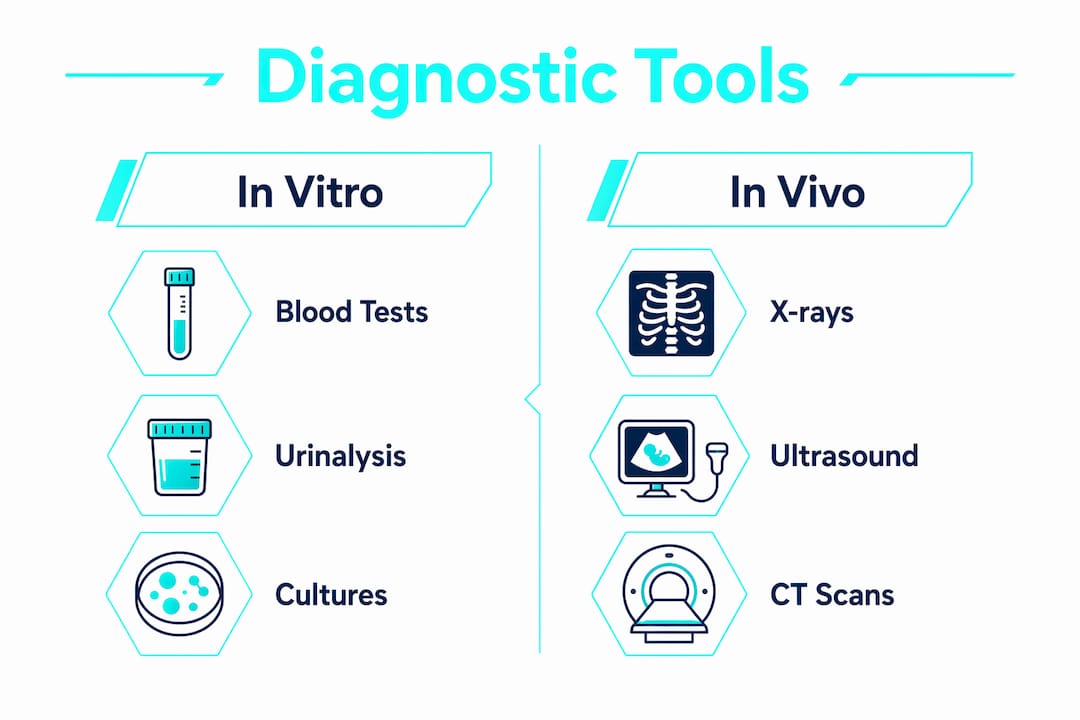
Clinical assessment methods fall into two broad categories. In vitro diagnostics include blood tests, urinalysis, and cultures performed on samples removed from the body. In vivo diagnostics include imaging studies such as X-ray, MRI, and ultrasound performed directly on the patient. Both categories serve distinct functions, and selecting the right type depends on the clinical question being asked.
The importance of diagnostic tools extends beyond individual patient encounters. Accurate, timely diagnosis reduces unnecessary procedures, shortens hospital stays, and lowers the cost of care. Clinicians who treat diagnostics as a core clinical skill, rather than a support service, consistently make faster and more defensible decisions.
What are the primary types of diagnostic tools used in patient assessment?
Understanding the categories of diagnostic tools helps clinicians match the right test to the right clinical scenario. The three main categories are in vitro diagnostics, in vivo diagnostics, and point-of-care diagnostics.
In vitro diagnostics are the most commonly ordered tools in clinical practice. They include:
Complete blood count (CBC): Screens for anemia, infection, and hematologic disorders
Comprehensive metabolic panel (CMP): Evaluates kidney function, liver enzymes, and electrolytes
Urinalysis: Detects urinary tract infections, kidney disease, and metabolic conditions
Cultures and sensitivities: Identify pathogens and guide antibiotic selection
Biomarker panels: Procalcitonin for sepsis, troponin for cardiac injury, and HbA1c for diabetes management
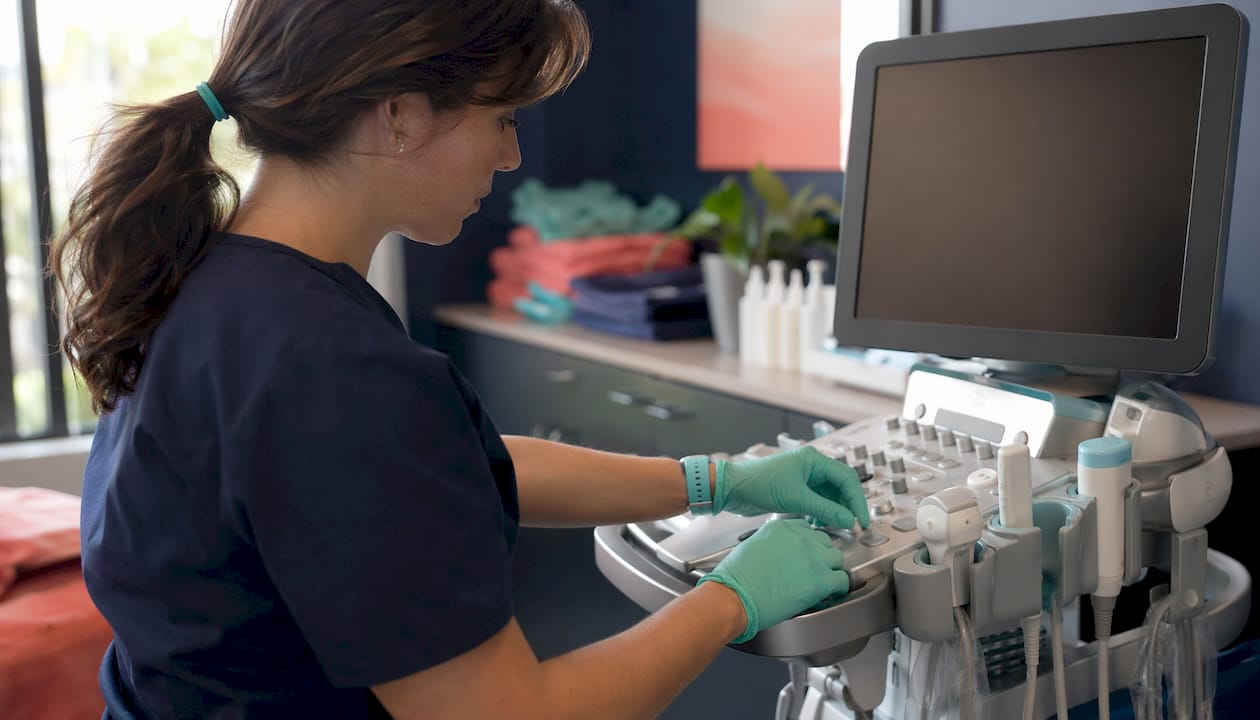
In vivo diagnostics provide structural and functional information that lab tests cannot. X-rays remain the first-line imaging tool for fractures and pulmonary pathology. MRI offers superior soft-tissue resolution for neurological and musculoskeletal conditions. Ultrasound provides real-time imaging without radiation, making it the preferred tool for abdominal and obstetric assessment.
Point-of-care diagnostics represent the fastest-growing segment of clinical assessment tools. Point-of-care tools like POCUS and high-sensitivity troponin deliver rapid, actionable results at the bedside. That speed directly reduces time-to-treatment in acute settings.
Pro Tip: Match test sensitivity to your clinical goal. High-sensitivity tests rule out disease by minimizing false negatives, while high-specificity tests confirm disease by minimizing false positives. Choosing the wrong type wastes time and can mislead management.
How does diagnostic stewardship improve patient outcomes?
Diagnostic stewardship is the systematic practice of ordering, performing, and interpreting diagnostic tests appropriately to improve care quality and reduce harm. The term is borrowed from antimicrobial stewardship and applies the same logic: more testing is not better testing.
The scale of the problem is significant. Clinicians order 40%–60% of diagnostic tests unnecessarily, increasing the risk of overdiagnosis and overtreatment. Unnecessary tests generate abnormal results that require follow-up, expose patients to additional procedures, and increase costs without improving outcomes.
A structured stewardship approach addresses this through four steps:
Define the clinical question. Every test order should answer a specific question that will change patient management.
Select the appropriate test. Match the test’s sensitivity and specificity to the clinical scenario.
Interpret results in context. A positive result in a low-probability patient carries a different meaning than the same result in a high-probability patient.
Act on findings. Tests are valuable only when results change management. Ordering tests “just in case” generates waste and potential harm.
The CDC’s Diagnostic Excellence programs formalize this approach at the hospital level. DxEx programs improve test ordering processes, interpretation workflows, and follow-up communication to prevent diagnostic errors before they reach the patient.
One concrete example: routine procalcitonin ordering without appropriate clinical context can prolong antibiotic treatment or cause misinterpretation. Stewardship protocols that require clinical justification before ordering procalcitonin reduce this risk significantly.
Pro Tip: Before ordering any test, ask one question: “Will this result change what I do next?” If the answer is no, the test is unlikely to benefit the patient.
What challenges limit effective use of diagnostic tools in healthcare?
Diagnostic tools are underused, misused, and underfunded relative to their clinical impact. Several systemic and practical barriers explain why.
Regulatory and reimbursement misalignment. Payment policies lag behind scientific advances, leaving powerful diagnostic tools underused and underfunded. Former FDA Commissioner Dr. Robert Califf has identified this misalignment as a critical barrier to optimized healthcare.
Cost barriers for patients. Diagnostic blood tests can cost around $1,000 without insurance, while related treatments may cost $30,000 annually. Patients who cannot access the test cannot access the matched treatment.
“Just in case” ordering culture. Clinicians who order broad panels to avoid missing diagnoses generate high rates of incidental findings. Those findings trigger further testing, creating a cascade that increases patient anxiety and system costs without improving outcomes.
Communication breakdowns. Diagnostic delays often arise from poor information exchange between clinicians, labs, and patients. A result that is never communicated or acted on provides no clinical value.
Misinterpretation of results. A test result is only as useful as the clinician’s ability to interpret it in context. Clinicians who lack training in Bayesian reasoning frequently over-respond to low-probability positive results.
Understanding reimbursement structures in medical retail helps procurement teams and practice managers align supply decisions with clinical priorities. The financial gap between diagnostic access and treatment access is a policy problem, but it has practical consequences at the clinic level every day.
What innovations are transforming diagnostic tools and patient assessment?
Point-of-care diagnostics are reshaping how clinicians assess patients across every care setting. Bedside ultrasound (POCUS), high-sensitivity troponin assays, and rapid molecular testing have moved critical diagnostic capability out of the central lab and into the hands of the treating clinician. That shift reduces time-to-decision in emergency medicine, acute care, and pre-hospital settings.
Key developments driving this transformation include:
POCUS adoption in emergency and critical care. Clinicians use bedside ultrasound to assess cardiac function, detect pneumothorax, and guide procedures in real time.
High-sensitivity troponin assays. These tests rule out acute myocardial infarction faster than older assays, reducing unnecessary admissions and accelerating safe discharge.
Rapid molecular diagnostics. PCR-based point-of-care platforms identify respiratory pathogens, sexually transmitted infections, and antimicrobial resistance genes within minutes rather than days.
Clinical decision-support integration. Electronic health record systems now embed diagnostic algorithms that flag abnormal results, suggest follow-up tests, and alert clinicians to potential drug-test interactions.
Decentralized testing for home and community care. Wearable biosensors and home-based test kits extend diagnostic reach beyond the clinic, supporting chronic disease management and post-discharge monitoring.
Point-of-care diagnostics improve patient flow and reduce hospital admissions by enabling faster, more accurate bedside assessments. That outcome matters most in high-volume emergency departments where bed capacity is the primary constraint.
Clinicians who stay current with surgical equipment and diagnostic technology options are better positioned to advocate for the tools their patients actually need.
Key Takeaways
Diagnostic tools drive approximately 70% of clinical decisions, making appropriate selection and interpretation the single most impactful skill in patient assessment.
Point | Details |
Diagnostics drive clinical decisions | Approximately 70% of medical decisions depend on diagnostic results, not symptoms alone. |
Overtesting is a documented problem | Clinicians order 40%–60% of tests unnecessarily, increasing harm and cost without improving outcomes. |
Stewardship improves care quality | Only order tests whose results will change patient management; DxEx programs formalize this standard. |
Cost and policy gaps limit access | Diagnostic tests can cost $1,000 without insurance while matched treatments cost $30,000 annually. |
Point-of-care tools are reshaping assessment | POCUS and high-sensitivity troponin deliver bedside results that reduce admissions and speed treatment. |
What I’ve learned from watching clinicians misuse their best tools
After years of working closely with healthcare procurement and clinical supply teams, the pattern I see most often is not underinvestment in diagnostic equipment. It is overconfidence in the act of ordering. Clinicians who order more tests believe they are being thorough. The data says otherwise.
The 40%–60% unnecessary testing rate is not a failure of equipment. It is a failure of clinical reasoning. The test is not the diagnosis. The test is a data point that either confirms or challenges a hypothesis the clinician should have formed before ordering. When that hypothesis is absent, the test becomes noise.
What actually works is simpler than most continuing education programs suggest. Ask the clinical question first. Then ask whether any available test can answer it with enough accuracy to change management. If yes, order the most specific test available. If no, document your reasoning and reassess. That process takes 30 seconds and eliminates the majority of low-value testing.
The second thing I would push harder on is communication. Diagnostic errors frequently trace back to results that were reported but never acted on. Building a closed-loop system where every abnormal result has an assigned owner is not a technology problem. It is a workflow problem that any practice can solve with existing tools.
The clinicians I respect most treat diagnostics as a discipline, not a service. They know their tests, they know their populations, and they know when not to order. That judgment is what separates good clinical assessment from expensive guesswork.
— QB
How Queenssurgical supports safe and effective patient assessment
Safe patient assessment depends on more than the right test. It requires a clinical environment where practitioners are protected and equipped to work accurately.
Queenssurgical supplies the protective equipment that makes safe assessment possible. The CPE Thumb Loop Isolation Gown and fluid-resistant isolation gowns meet the protective standards required for direct patient contact in clinical and acute care settings. For skin integrity during extended assessment protocols, the DynaShield Skin Protectant Cream supports both patient and practitioner skin health. Queenssurgical serves clinics, hospitals, and healthcare facilities across the Americas with competitively priced, quality-verified medical supplies available through both wholesale and retail channels.
FAQ
What percentage of clinical decisions depend on diagnostic tools?
Diagnostic tools influence approximately 70% of all clinical medical decisions. That figure applies across primary care, emergency medicine, and specialist practice.
What is diagnostic stewardship?
Diagnostic stewardship is the practice of ordering, performing, and interpreting tests appropriately to reduce unnecessary testing and improve patient outcomes. The CDC’s DxEx programs provide a structured framework for implementing stewardship at the hospital level.
How much of diagnostic testing is unnecessary?
Clinicians order 40%–60% of diagnostic tests unnecessarily, according to published clinical data. Unnecessary testing increases costs, generates incidental findings, and raises the risk of overtreatment.
What are point-of-care diagnostics?
Point-of-care diagnostics are tests performed at or near the patient, including POCUS and high-sensitivity troponin assays, that deliver immediate results without sending samples to a central lab. They are central to acute medicine and decentralized care delivery.
Why do patients struggle to access critical diagnostic tests?
Diagnostic blood tests can cost around $1,000 without insurance, while the treatments they guide may cost $30,000 annually. Regulatory and reimbursement policies have not kept pace with diagnostic innovation, leaving many patients without access to the tests that would direct their care.
Recommended
Comments