Refurbished Medical Equipment: What It Means in 2026
- Qubit Technology
- Jun 14
- 7 min read
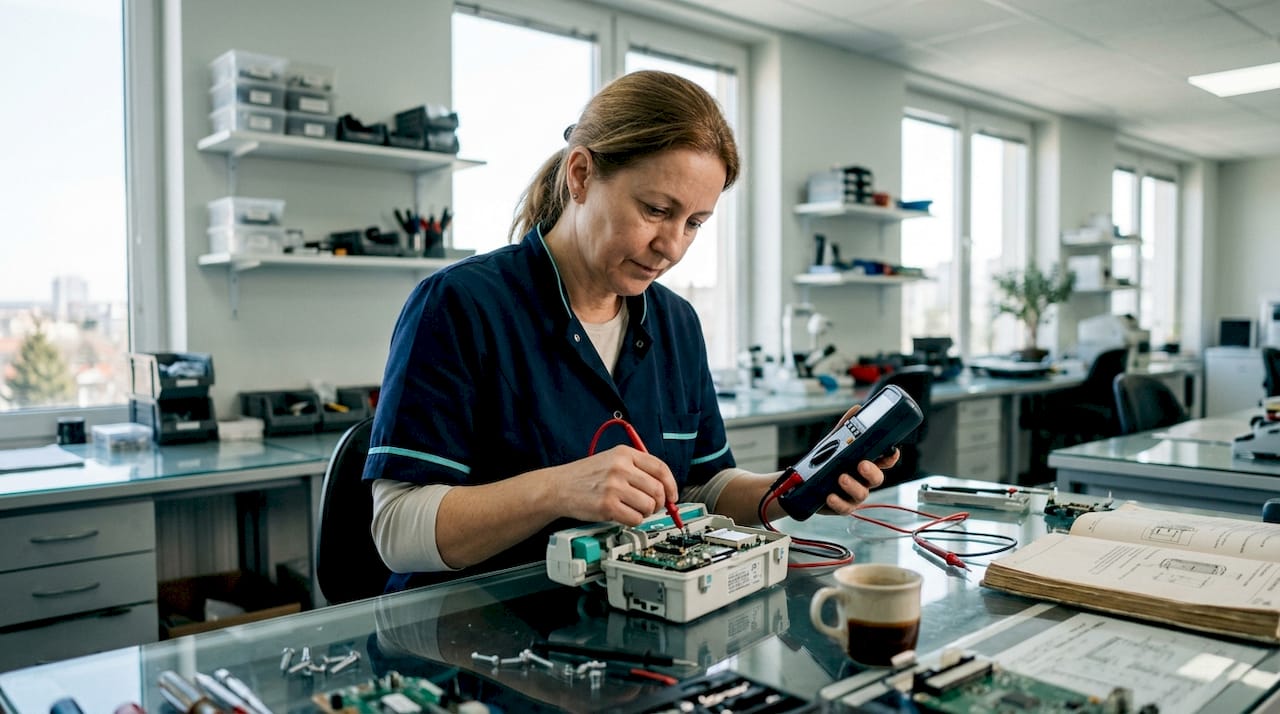
Refurbished medical equipment is defined as previously used medical devices that have been inspected, repaired, cleaned, tested, and restored to meet specified performance and safety standards. Understanding what does refurbished medical equipment mean goes beyond a simple label. The FDA, the Therapeutic Goods Administration (TGA), and suppliers like medlabinstruments.com and imedsales.com each approach the term differently. For healthcare decision-makers, that inconsistency is the central procurement risk. A device called “refurbished” by one vendor may mean a full engineering rebuild. For another, it may mean a wipe-down and a power-on test.
What does refurbished medical equipment mean legally?
The regulatory answer depends entirely on which authority governs your jurisdiction and what work was actually performed. The FDA draws a clear line between two categories. Servicing restores a device to its original OEM safety and performance specifications without changing its intended use. Remanufacturing significantly alters device performance, safety specifications, or intended use. That distinction carries real compliance weight.
Remanufacturing triggers obligations that servicing does not. These include device registration, adverse event reporting, and coverage under the FDA’s Quality System Regulation. A 2026 FDA workshop confirmed that procurement decisions hinge on whether the work performed constitutes servicing or remanufacturing, not on what the vendor calls it. The FDA’s enforcement centers on activities actually performed, not the self-applied label.

The TGA takes an even more consequential position. Under TGA rules, a substantial rebuild of a device may classify the refurbisher as the new manufacturer. That status requires the refurbisher to assign a new Unique Device Identifier (UDI-DI), remove the original UDI marking, and meet full manufacturer obligations. In Australia, this is not theoretical. It is a regulatory trigger with direct compliance consequences.
Key regulatory distinctions to track before any purchase:
Servicing: Restores to OEM specs. Lower regulatory burden. No new registration required.
Remanufacturing: Changes performance or intended use. Triggers FDA registration, adverse event reporting, and quality system requirements.
TGA substantial rebuild: Converts refurbisher into manufacturer. Requires new UDI-DI and removal of original UDI.
Regulatory label vs. activity: The FDA evaluates what was done, not what the invoice says.
Pro Tip: Ask every supplier to specify whether their process constitutes FDA servicing or remanufacturing before you sign a purchase order. That single question separates compliant vendors from risky ones.
How is medical equipment refurbished in practice?
The refurbishment process varies significantly across suppliers, and that variance directly affects clinical safety. A credible refurbishment program follows a defined sequence of steps. Suppliers describe refurbished equipment as going through inspection, disassembly, parts replacement, cleaning, disinfection, calibration, and performance testing before delivery.
A well-documented refurbishment process for a piece of imaging equipment, such as an ultrasound system, typically includes:
Initial inspection: Assess overall device condition, identify damaged or worn components.
Disassembly: Break down the device to access internal components for evaluation.
Parts replacement: Swap out faulty or end-of-life components with OEM-grade or equivalent parts.
Cleaning and disinfection: Remove biological contamination and prepare surfaces to clinical standards.
Calibration: Align device output to manufacturer specifications using traceable measurement tools.
Performance testing: Verify probe compatibility, image quality, keyboard function, software integrity, and cart condition against OEM benchmarks.
Documentation: Record all steps, parts used, and test results in a traceable refurbishment report.
The gap between minimal reconditioning and engineering-grade refurbishment is significant. Minimal reconditioning may involve only external cleaning and a basic power-on test. Engineering-grade refurbishment replaces worn internal components, recalibrates sensors, and validates performance against OEM specifications. Only the latter reliably meets clinical safety expectations. A maintenance schedule aligned to OEM standards is the baseline for any device entering clinical use.
Pro Tip: Request the actual calibration records and test output reports, not just a summary certificate. If a supplier cannot produce them, the refurbishment process is not documented to a standard you should accept.
Refurbished vs. used vs. pre-owned vs. remanufactured: what is the difference?
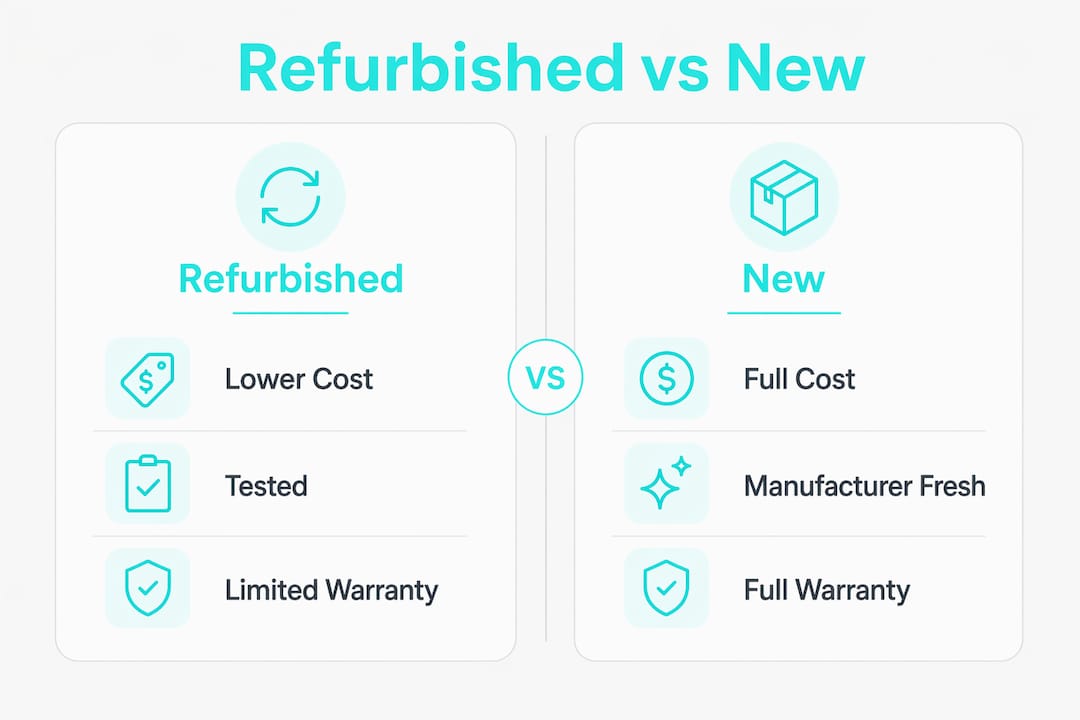
These four terms appear interchangeably in vendor catalogs, but they describe meaningfully different conditions and scopes of work. Buyers who accept labels at face value expose their facilities to unverified clinical risk. The term “refurbished” functions as a marketing label across the secondary market, with no single fixed regulated meaning.
Term | Condition | Typical Scope | Warranty | Cost vs. New |
Used | As-is from prior owner | No formal process | Rarely included | Lowest |
Pre-owned | Inspected, may be cleaned | Light inspection only | Sometimes | Low to moderate |
Refurbished | Inspected, repaired, tested | Varies widely by supplier | Usually included | 30–70% less |
Remanufactured | Rebuilt to new or altered specs | Full rebuild, may change function | Typically included | Moderate to high |
Refurbished equipment typically costs 30–70% less than new equipment when refurbishment is executed to defined standards with full documentation. That cost advantage disappears if the device fails in clinical use due to undisclosed deficiencies.
Three questions to ask before accepting any label:
What specific steps were performed during refurbishment?
Were any components replaced, and with OEM or third-party parts?
What performance tests were run, and what were the results?
Understanding how regulated medical device retail classifies these categories helps procurement teams apply the right level of scrutiny to each purchase.
How to vet a refurbished medical equipment supplier
Supplier vetting is where procurement strategy either protects or exposes your facility. The word “refurbished” on a spec sheet means nothing without supporting evidence. Quality assurance teams should treat “refurbished” as a documentation request, not a quality guarantee.
A structured vetting process covers these areas:
Refurbishment checklist: Request the full task list performed on the specific device, including disassembly, parts replaced, cleaning protocols, and calibration steps.
Test reports: Require objective performance test results measured against OEM specifications, not a generic pass/fail certificate.
OEM alignment: Confirm whether the refurbishment process was designed to meet the original manufacturer’s safety and performance standards.
Warranty terms: Evaluate the length, scope, and exclusions. A supplier confident in their process offers a meaningful warranty. Short or heavily qualified warranties signal limited confidence.
Regulatory classification: Map the scope of work to the FDA servicing vs. remanufacturing framework. If the work constitutes remanufacturing, verify the supplier holds appropriate registrations and quality system compliance.
UDI and traceability: For devices subject to UDI requirements, verify device identification and lifecycle data are consistent with applicable regulations. In Australia, a substantial rebuild requires a new UDI-DI and removal of the original marking.
Procurement teams sourcing from the secondary market should also review guidance on gray market medical equipment to understand how unauthorized distribution channels affect device traceability and warranty validity.
Pro Tip: Score suppliers on documentation quality before price. A vendor who provides complete refurbishment records, calibration outputs, and OEM-aligned test results is demonstrably lower risk than one offering a lower price with a one-page certificate.
Key takeaways
Refurbished medical equipment is only as reliable as the documentation and regulatory alignment behind it. The label alone tells you nothing about clinical safety.
Point | Details |
Definition requires specifics | “Refurbished” has no single regulated meaning; always request the full scope of work performed. |
FDA classification matters | Determine whether work is FDA servicing or remanufacturing before purchase, as each carries different compliance obligations. |
Cost advantage is real but conditional | Refurbished devices cost 30–70% less than new, but only when refurbishment meets documented OEM standards. |
Documentation is the quality signal | Calibration records, test outputs, and parts lists are the only reliable indicators of refurbishment quality. |
Traceability protects your facility | Verify UDI compliance and device lifecycle data, especially when purchasing from non-original manufacturers. |
The label is the last thing i trust
After years of watching procurement teams get burned by the word “refurbished,” my position is straightforward: treat it as a starting point for questions, not an answer. The suppliers who use the term most confidently are often the ones with the least documentation to back it up.
The facilities that procure refurbished equipment well share one habit. They ask for the refurbishment checklist before they ask for the price. When a supplier hesitates at that request, the conversation is over. A vendor who has done the work properly has the records. A vendor who has not will offer reassurances instead.
The regulatory framework from the FDA and TGA is not bureaucratic overhead. It is a practical map for evaluating what was actually done to a device. Aligning your procurement process to that framework, specifically by determining whether work constitutes servicing or remanufacturing, gives you a defensible basis for every purchase decision. That matters when a device fails and you need to explain why it was in your facility.
Long-term supplier relationships in this category are built on transparency, not price. The vendors worth keeping are the ones who proactively share documentation, stand behind warranty terms, and can answer regulatory questions without hesitation.
— QB
Source quality medical supplies through Queenssurgical
Healthcare facilities that prioritize quality assurance in procurement need a supplier who meets that standard across every product category. Queenssurgical supplies medical equipment and consumables to clinics, hospitals, and healthcare organizations across the Americas, with a catalog built around verified quality and competitive pricing.
Whether you are sourcing durable equipment or replenishing clinical consumables, Queenssurgical provides a straightforward procurement experience with product standards you can rely on. Browse the full catalog at queenssurgical.net to find the supplies your facility needs, backed by a distributor that takes sourcing integrity seriously.
FAQ
What does refurbished mean for medical devices?
Refurbished medical devices are previously used devices that have been inspected, repaired, cleaned, tested, and restored to a defined working standard. The scope of that process varies by supplier, so documentation is required to confirm quality.
Is refurbished medical equipment safe for clinical use?
Refurbished equipment is safe when refurbishment is performed to OEM specifications with full documentation of parts replaced, calibration results, and performance testing. Equipment with incomplete or absent documentation carries unverified clinical risk.
How does the FDA distinguish refurbished from remanufactured devices?
The FDA defines servicing as restoring a device to its original OEM safety and performance specifications, while remanufacturing changes device performance, safety, or intended use and triggers additional regulatory obligations including registration and adverse event reporting.
What documentation should i request from a refurbished equipment supplier?
Request a complete refurbishment checklist, calibration records, performance test results measured against OEM specifications, parts replacement logs, and warranty terms. These documents confirm the scope and quality of work performed.
How much less does refurbished medical equipment cost compared to new?
Refurbished medical equipment typically costs 30–70% less than new equipment. That savings is only realized when the refurbishment process meets documented standards and the device performs reliably in clinical use.
Recommended
Comments