Double Gloving Guidelines: What U.S. Teams Should Follow
What CDC, OSHA, AORN and WHO say about double gloving, when to do it, how to don two pairs, and what procurement teams should stock for compliance.
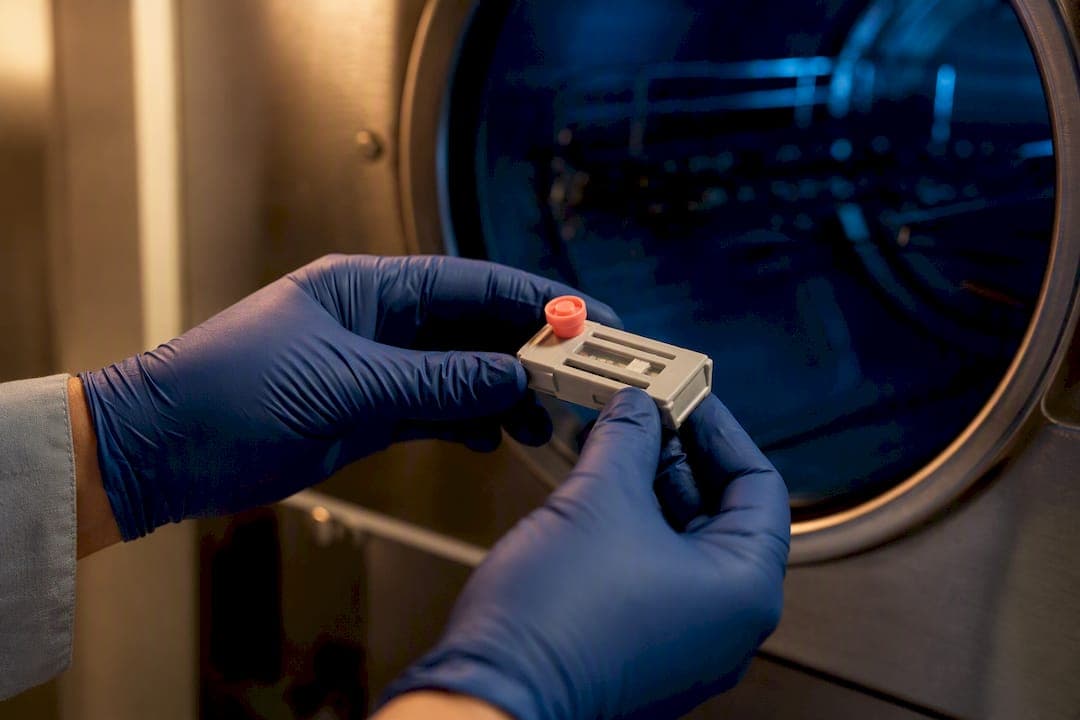
Biological indicators (BIs) are the definitive, outcome-based test for steam sterilization, the only method that proves microbial lethality rather than just confirming the cycle ran. Every implant load requires one, and routine loads need BI testing at least weekly, with many facilities running it daily. The standard test organism is Geobacillus stearothermophilus. A positive BI means immediate quarantine of the affected loads and a defined retest before the sterilizer goes back into service, following established protocols requiring repeated testing or consecutive negative results after service.
TL;DR:
Stock Reliable Sterilization Essentials
Find medical supplies, instruments, and equipment to support sterile processing teams and healthcare facilities across the Americas.
A biological indicator carries a known population of highly resistant bacterial spores through a sterilization cycle. If the spores die, the cycle achieved lethality. If they survive, something failed, regardless of what the printout says. That distinction separates BIs from chemical and physical monitors, which only confirm that the sterilizer attempted the right conditions.
Chemical indicators change color when exposed to steam, heat, or time thresholds. Physical monitors log temperature, pressure, and cycle duration on the sterilizer’s own gauges or printouts. Neither one can tell you whether the microbial load inside a wrapped tray actually died.
BIs earn their place in three specific situations:
Chemical and physical monitors still matter for catching gross cycle failures fast, before you even get to the BI incubator. Cleaning, disinfection, and sterilization each play a different role in the decontamination chain, and BIs sit at the top of that hierarchy as the final proof point.
Geobacillus stearothermophilus is the standard organism for steam BIs because its spores tolerate moist heat far better than almost any pathogen a sterilizer would realistically encounter, according to CDC guidance on sterilization and disinfection practices. Its D121°C value, the time needed at 121°C to kill 90 percent of the spore population, typically runs one to two minutes depending on the manufacturer’s preparation. That resistance margin is the whole point: if this organism dies, weaker organisms almost certainly did too.
BIs come in a few physical formats:
Turnaround gap: Conventional spore strips sent to an outside lab can take 24 to 48 hours or longer for a culture result. Rapid-readout SCBIs, evaluated against the manufacturer’s validated protocol, can return a reliable result in as little as 1 to 3 hours, which is the difference between holding an implant tray overnight and releasing it the same shift.
A BI placed in an easy spot proves nothing. It has to sit where steam struggles hardest to reach, inside a process challenge device (PCD), positioned at the coldest point your facility identified during performance qualification mapping. For many chamber designs, that spot ends up on the bottom shelf near the drain, but you should never assume it without your own thermometric mapping data.
Pro Tip: If your facility hasn’t re-mapped cold spots since a sterilizer was serviced or relocated, don’t trust last year’s PQ data. A repaired steam trap or a new door gasket can shift the worst-case zone entirely.
The mechanics are simple, but the sequence matters. Skip a control and you can’t trust the result either way.
A few checks belong in every SOP, regardless of format:
Rapid SCBIs shrink the wait from a day or more down to roughly one to three hours, which is why most implant-heavy SPD departments have shifted toward them for time-sensitive releases. Conventional strips sent to an outside lab still have a place for routine, non-urgent loads where a longer turnaround doesn’t hold up surgery.
A positive BI means the spores survived. That load, and every load run since the last passing BI on that sterilizer, gets quarantined immediately. Implants from a suspect cycle do not go to the OR under any circumstances, and the SPD supervisor needs to know before the next load goes in.
The standard retest path after inspection and correction is either one full repeat BI test on a full load, or three consecutive empty-chamber BI passes, following the sterilizer’s inspection and repair. The sterilizer stays out of service until it clears one of those two paths.
Root cause matters more than the retest itself. A large peer-reviewed quality-assurance dataset found that sterilizer failure rates dropped to 0.15% in 2022, and most of those failures traced back to human error rather than mechanical defects. That’s a useful reality check: before calling a service engineer, check the basics.
Pro Tip: Keep a simple failure log with date, cycle number, load contents, and suspected cause. Patterns show up fast, and a repeat failure on the same shift or same load type points you toward training gaps long before it points toward the sterilizer itself.
AAMI ST79 sets the baseline most U.S. facilities work from: BI monitoring at least weekly, daily preferred, and mandatory for every implant load. ISO 11138 governs the manufacturing and performance standards for the BIs themselves, including spore population and resistance claims. CDC guidance on sterilization practices and FDA’s inspection framework for sterilization process controls both treat BI records as objective evidence of process control, meaning they’re the first thing an inspector or accreditor asks to see.
Your records should be able to answer, for any given cycle, whether the process worked:
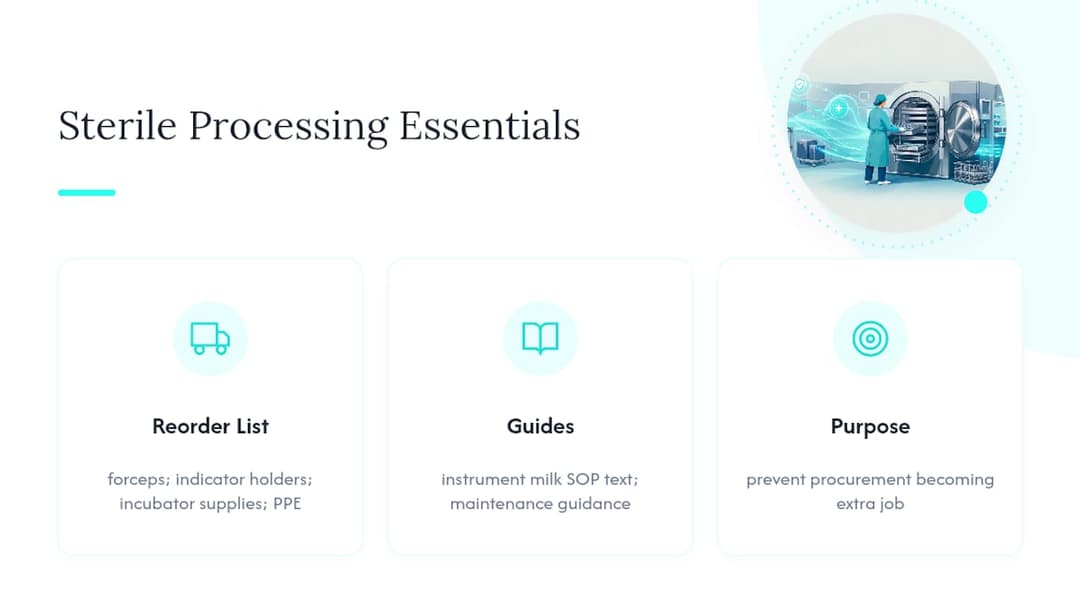
Running a tight BI program means keeping the right consumables on hand, not scrambling when a lot runs low. Utility sterilizer forceps for safely handling hot trays, sterile indicator holders, incubator consumables, and PPE for anyone pulling loads all belong on a standing reorder list. These SPD staples are part of broader instrument and consumable lines designed for departments that don’t want procurement turning into a second job.
For teams building or revising SOPs, An instrument milk and sterile processing operations guide offers procedural language you can adapt directly, and medical equipment maintenance guidance pairs well with BI troubleshooting when a failure traces back to the sterilizer itself rather than technique.
Run BIs on schedule, log positive and negative controls every time, and never skip a PCD for the sake of convenience. Escalate to biomedical engineering when steam quality or mechanical function is in question; call the vendor when the fix requires parts or calibration beyond in-house scope. Facilities still relying on next-day lab strips for implant loads should weigh a rapid-readout SCBI, since cutting hold time from a full day to a few hours changes how surgery scheduling actually works.
— QB
Running a BI program well depends on having the right consumables in stock the day you need them, not three days later on backorder. Sterile processing departments benefit from suppliers offering gloves, PPE, instruments, and wellness products that keep decontamination and sterilization workflows moving without a supply gap forcing a workaround.
Beyond BI logistics, a fully stocked SPD area needs protective gear for staff handling loads straight out of the autoclave and skin care for hands that go through dozens of glove changes a shift. Isolation gowns for barrier protection during load handling and skin protectant options are available for staff dealing with the dryness that comes with frequent handwashing and glove use. Browse the current catalog and place a standing order so your BI program, and everything around it, never stalls for lack of supply.
This article is general information, not a substitute for advice from a qualified doctor. Consult a qualified healthcare professional about your own circumstances before acting on anything here.
What CDC, OSHA, AORN and WHO say about double gloving, when to do it, how to don two pairs, and what procurement teams should stock for compliance.
Mayo and Metzenbaum scissors look alike but do different jobs. See how blades, shanks and tips differ, when to use each, and how to care for them.
Sterile water or saline? Learn the difference in tonicity, safe uses, wound irrigation evidence, and how to choose irrigation and dressing supplies.