Double Gloving Guidelines: What U.S. Teams Should Follow
What CDC, OSHA, AORN and WHO say about double gloving, when to do it, how to don two pairs, and what procurement teams should stock for compliance.
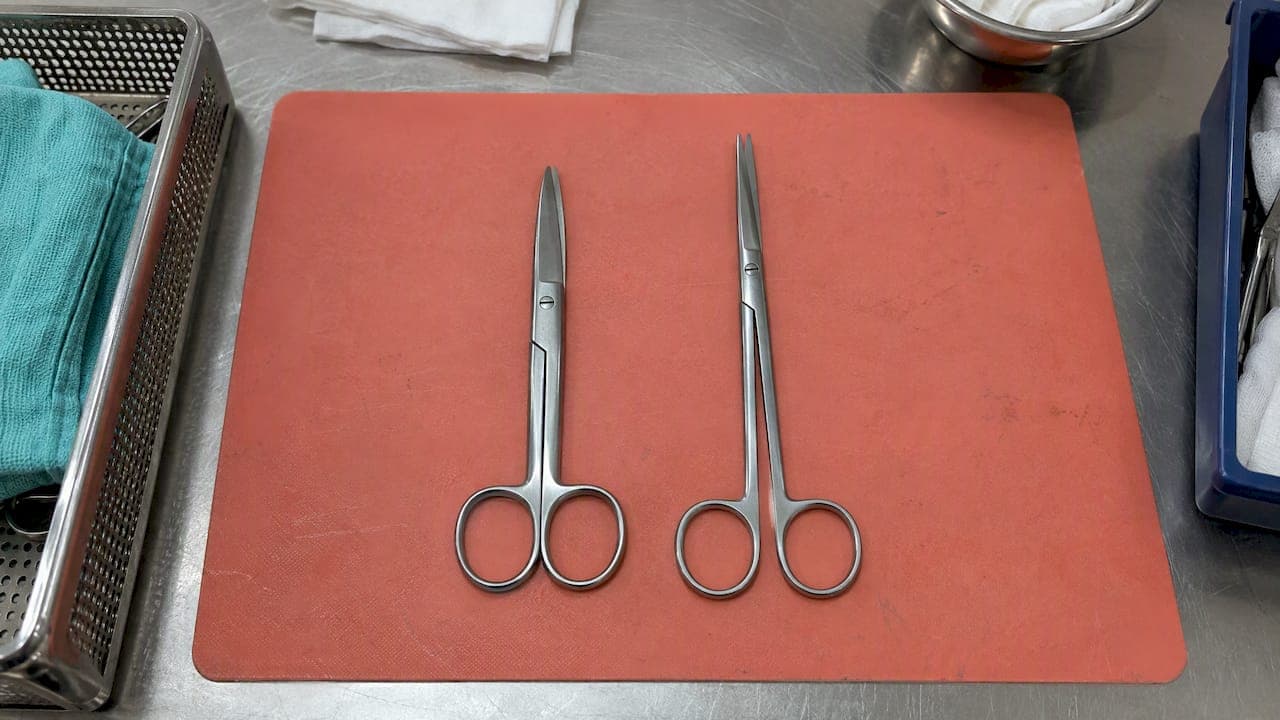
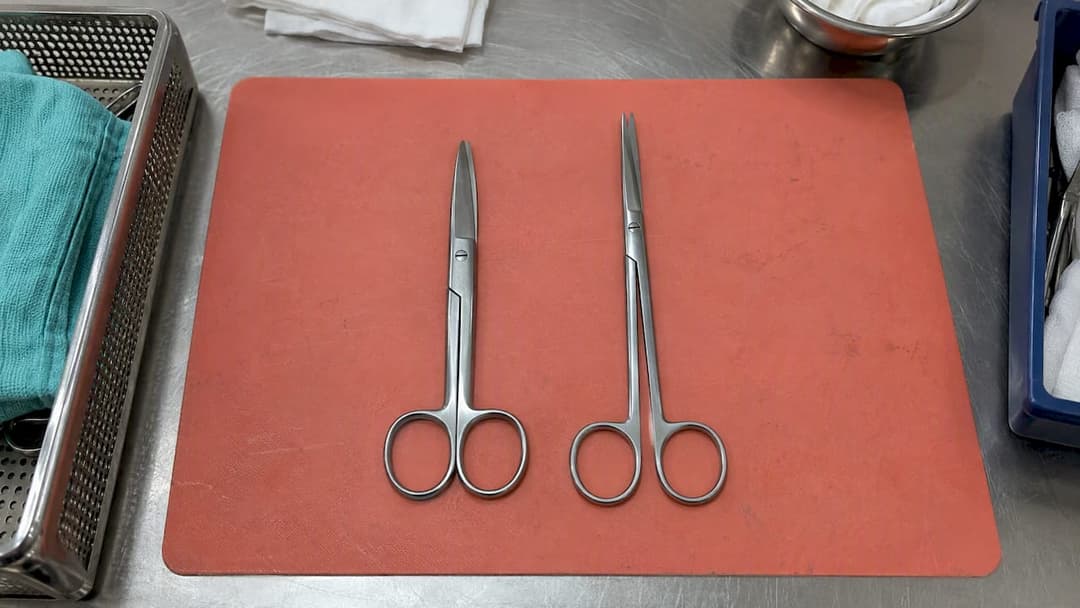
Mayo scissors are the heavy, sturdy pair: use them for suture, drapes and dense tissue such as fascia. Metzenbaum scissors (“Metz”) are the light, fine pair with longer handles: use them for dissecting delicate tissue. They look alike on a tray, but they are built for different work, and swapping them ruins the finer instrument. This guide covers how to tell them apart, which pattern fits which task, how to protect the edges, and what to check before you buy for a clinic, OR or sterile processing department.
Choose Surgical Scissors With Confidence
Browse Queens Surgical’s medical instruments alongside supplies for clinics, hospitals, and healthcare professionals.
The American College of Surgeons’ common surgical instruments module describes Mayo scissors as heavy-duty instruments with stronger blades and shanks, designed for dense tissue. Metzenbaum scissors are lightweight, fine instruments with a high shank-to-blade ratio, reserved for delicate tissue. The same document notes that on Mayos the joint sits toward the middle of the instrument, while Metzenbaums have a longer shank relative to the blade.
| Feature | Mayo | Metzenbaum |
|---|---|---|
| Build | Heavy, robust blades and shanks | Light, fine, slender blades |
| Proportions | Joint toward the middle; shorter blades | Long shank-to-blade ratio; longer, finer blades |
| Tips | Wider, blunt | More tapered and pointed, though still blunted |
| Main job | Dense tissue, suture, drapes | Delicate dissection |
| Patterns | Straight and curved | Straight and curved |
| Nickname | Straight Mayo = “suture scissors” | “Metz” |
The tip comparison comes from a manufacturer comparison of the two patterns, which describes Metzenbaum tips as more tapered and Mayo tips as wider and blunt for safety. Patterns vary by maker, so check specifications on the exact product.
Two quick checks work when the instruments are unlabeled.
If you are still unsure, do not use the pair on tissue. Mixing up the two is the classic tray error, and a Mayo used where a Metz belongs can cause avoidable trauma, while a Metz used on suture is damaged for good.
The AORN new member instrument resource lays out the split plainly: straight Mayo scissors cut suture, and curved Mayo scissors cut thick or heavy tissue. The University of Washington’s surgical skills guide adds that straight Mayos are often called suture scissors.
In practice, reach for Mayos when you are:
If you are specifying a curved Mayo for dense-tissue dissection, our Mayo dissecting scissors (curved) are the pattern to look at.
Metzenbaums are for dissection: separating tissue planes and cutting delicate structures where control counts. The UW guide explains that the long shank-to-blade ratio improves haptic feedback, so the surgeon can better feel tissue density during blunt dissection. That helps tell healthy, delicate tissue from critical structures or scar tissue.
Use Metzenbaums for:
The same guide states that experienced surgical staff do not use Metzenbaums to cut suture, because the fine edge dulls and the scissors stop doing their real job. Put a Mayo or dedicated suture scissors on the field for that.
The pattern comes from Dr. Myron Metzenbaum, born in Cleveland, Ohio, in 1876, according to ENT & Audiology News. A ScienceDirect topic summary says he wanted a better instrument for tonsillectomies after struggling with standard tools because of his smaller hands. That origin explains the design: light, precise, easy on the hand.
This is the question behind many searches for surgical scissors types. Curvature is a separate choice from Mayo versus Metz. Both families come in straight and curved versions.
Curved blades let the surgeon keep their hand out of their own line of sight in deep or confined fields. The UW guide makes this point for both families. So the real decision is about mechanics: durability for dense tissue (Mayo) versus precision and sensitivity for delicate structures (Metz). Shape then fine-tunes access.
A simple rule of thumb:
Mayo and Metz are only two of the common patterns. Columbia Surgery’s overview of surgical scissors separates dissecting scissors, which cut or separate tissue, from suture scissors, which are designed for cutting sutures. A few others are worth knowing:
No. Bandage scissors have an angled design with one blunt, rounded tip that slides under a dressing without injuring the skin. A University at Buffalo nursing piece, A Day in the Life of a Med-Surg Nurse, shows bedside nurses carrying them in their scrub pockets. Surgical scissors are sterile precision tools used in the surgical field. If you need the bedside type, browse the Lister bandage scissors and Knowles bandage scissors.
Good handling protects both patient and instrument. The UW guide is clear on grip: the thumb and ring finger go in the rings. Putting the middle or index finger in a ring is a common novice error that reduces control and lets the tips swing sideways, raising the risk of accidental tissue injury. The index finger rests on the screw head to stabilize the scissor.
Three habits extend the life of a pair:
The FDA lists scissors among reusable medical devices that providers can reprocess for use on multiple patients. Instruments that contact blood or sterile tissue are critical devices, so between patients they need thorough cleaning followed by high-level disinfection or sterilization, as the facility’s validated process and the manufacturer’s instructions for use require. Follow your own IFU and infection prevention policy, and ask your infection preventionist or sterile processing leader when a question is not answered by either.
Point-of-use handling matters too. Our guide to surgical instrument care for SPD and OR teams walks through the IFU and AORN-based habits that keep instruments from drying soiled and corroding. If your facility also handles disposable sharps, see our sharps disposal checks for U.S. healthcare buyers.
A life-cycle case study of disposable and reusable surgical scissors found that the environmental impact of disposable steel scissors can exceed that of reusable stainless steel by 99%. The economics are less clear-cut: they depend on your own cost of sterilization, cleaning and maintenance. A busy hospital with an in-house SPD and a small clinic that outsources reprocessing can reach different answers.
Whether you are stocking a new procedure room or replacing worn tray sets, run through this list.
As for the “best Metzenbaum scissors” or “best Mayo scissors” question, no single pair wins. The best pair is the one whose size, curvature and tips fit your procedures, and whose maker documents the reprocessing instructions you need.
We supply instruments to clinics, hospitals and purchasing teams, and the same pattern repeats: scissors are rarely replaced because they were a bad buy. They are replaced because the wrong job was done with them. A Metz used on suture looks fine on the tray and cuts poorly in the field.
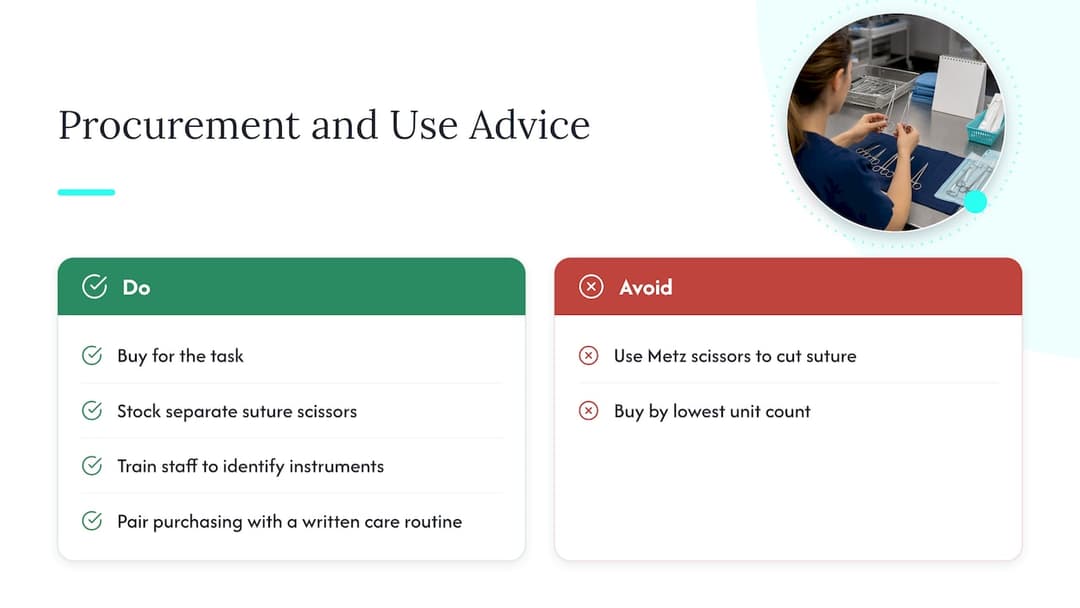
So our advice to procurement managers is practical. Buy for the task, not the lowest unit count. Stock separate suture scissors so fine dissecting pairs stay fine. Train new staff on identification before they handle a set. And pair your instrument purchasing with a written care routine, because reprocessing steps protect the edge as much as patients.
Our category range covers instruments, disposables, PPE and more, so one order can cover the tray and the consumables around it, for individual practitioners buying retail or organizations buying wholesale.
— QB
Looking for scissors, forceps and the consumables around them? Browse the Medical Instruments and Tools category and the rest of our catalog to build out trays for your clinic or facility. Pair scissors with tissue forceps or curved Crile forceps in the same order.
Mayo scissors are heavy, with strong blades and shanks, made for dense tissue and suture. Metzenbaum scissors are light and fine, with a longer shank relative to the blade, made for delicate dissection. Pick by the material you will cut, then choose curved or straight.
No. Cutting suture dulls the fine edge that dissection depends on. Use straight Mayo scissors or dedicated suture scissors for suture, drapes and mesh, and keep the Metz for tissue.
Dr. Myron Metzenbaum, an Ohio-born surgeon, developed them. Sources describe him as seeking a better instrument for tonsillectomies because standard tools were awkward for his smaller hands.
Bedside nurses typically carry bandage scissors, which have an angled shape and a blunt rounded tip to slide under dressings safely. They are different from sterile surgical scissors used inside the operative field.
What CDC, OSHA, AORN and WHO say about double gloving, when to do it, how to don two pairs, and what procurement teams should stock for compliance.
Sterile water or saline? Learn the difference in tonicity, safe uses, wound irrigation evidence, and how to choose irrigation and dressing supplies.
Thumb vs locking, toothed vs smooth, Adson vs DeBakey, dressing vs tissue forceps: how each type works, when to use it and how to buy and reprocess…