Double Gloving Guidelines: What U.S. Teams Should Follow
What CDC, OSHA, AORN and WHO say about double gloving, when to do it, how to don two pairs, and what procurement teams should stock for compliance.
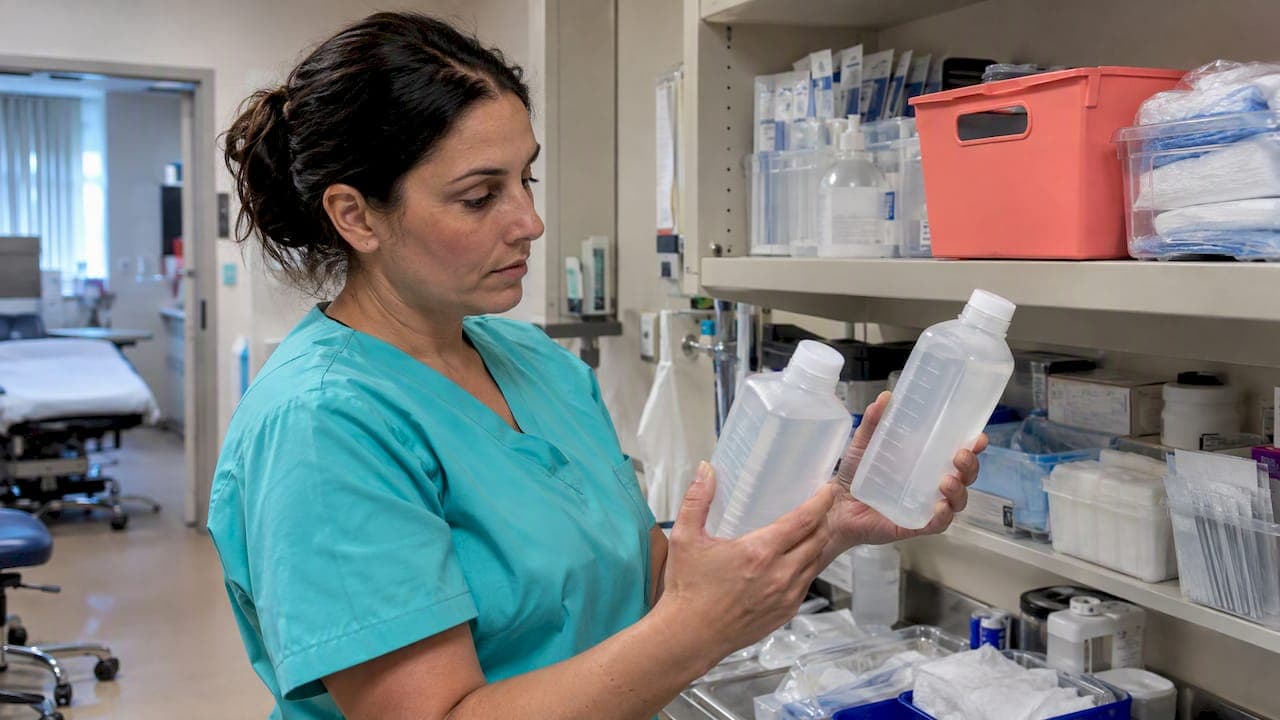
Sterile saline (0.9% sodium chloride) and sterile water are not interchangeable. Saline is isotonic, so it is the safe default for irrigating wounds, body cavities and anything that touches deep tissue. Sterile water is hypotonic, so keep it for rinsing equipment, diluting and the specific uses its label allows. For a simple, acute wound, the trial evidence says clean running tap water does about as well as sterile saline. What matters most is how you irrigate, not which bottle you pick.
This guide is for clinic managers, procurement teams and clinicians who buy irrigation fluids and dressings. It covers the chemistry, the evidence, the places where the wrong bottle causes harm, and how to stock sensibly.
Stock Wound Care Essentials
Explore medical supplies and equipment for healthcare professionals, clinics, hospitals, and other healthcare facilities.
Both are sterile and, in medical supply catalogs, usually both are labeled for irrigation. The difference is salt.
Sterile saline is water with 0.9% sodium chloride. That concentration is close to the salt concentration of human plasma, so it is isotonic. The 2025 review of irrigation solutions in PMC describes sterile saline as the most widely used irrigation solution, and notes that its isotonicity avoids the osmotic shifts that could injure sensitive tissue.
Sterile water has no solutes. It is hypotonic compared with blood and tissue, so water moves into cells. In the wrong place, cells swell and can burst. The FDA label for Sterile Water for Injection, USP describes it as distilled water meant for intravenous use only after a suitable solute is added. It is also hypotonic and can cause hemolysis if given without additives.
| Sterile saline (0.9% NaCl) | Sterile water | |
|---|---|---|
| Tonicity | Isotonic | Hypotonic |
| Wound irrigation | Standard choice | Acceptable for surface wounds in many protocols, not for deep tissue |
| Body cavities, bladder, surgical sites | Yes, if labeled for irrigation | Generally no |
| Diluting medications or solutes | Only if the drug label says so | Yes, when labeled as a diluent |
| Rinsing instruments and equipment | Possible, but leaves salt residue | Common choice |
| Relative cost | Higher | Lower |
Cost is real for large buyers. The same PMC review puts sterile saline at roughly ten times the cost of potable tap water, and that gap shows up quickly when a facility irrigates many wounds a week.
For the person asking at home or in a minor-injury setting, the answer is less strict than most product pages suggest.
A double-blind randomized trial of 2013 compared tap water with sterile saline before suturing. Infection rates were 3.5% with tap water and 6.4% with saline. The difference did not reach statistical significance, so the trial supports tap water as a safe alternative, not as a superior one. A 2025 narrative review of tap water in emergency departments reached a similar conclusion. It found no significant difference in infection rates across randomized trials and a recent systematic review, and it saw cost and practicality advantages when potable water is available.
The Cochrane review on water for wound cleansing frames the same debate. Saline is favored because it is isotonic and does not interfere with healing, while tap water is common in community care. The evidence for chronic wounds is thinner than for acute ones, so do not stretch the tap water results to every wound type.
What the evidence does not say:
So, a practical rule: for an acute, minor wound in a person with an intact immune system, potable running water is a defensible choice. When you are inside a clinic with a protocol, a deep wound, a burn, a surgical site or a vulnerable patient, use sterile saline and follow the facility’s policy.
A lot of wound complications have nothing to do with the fluid. A PSNet case review on an open elbow wound stresses that the common failures are missed foreign bodies such as gravel or dirt, and closing wounds that are still dirty. No sterile solution compensates for inadequate debridement.
The same source gives working numbers for traumatic wound irrigation:
If an injury is deep, gaping, bites, involves a joint, tendon or nerve, or the person has diabetes or a weakened immune system, they need a clinician, not an irrigation bottle.
This is where mixing up the two causes real harm.
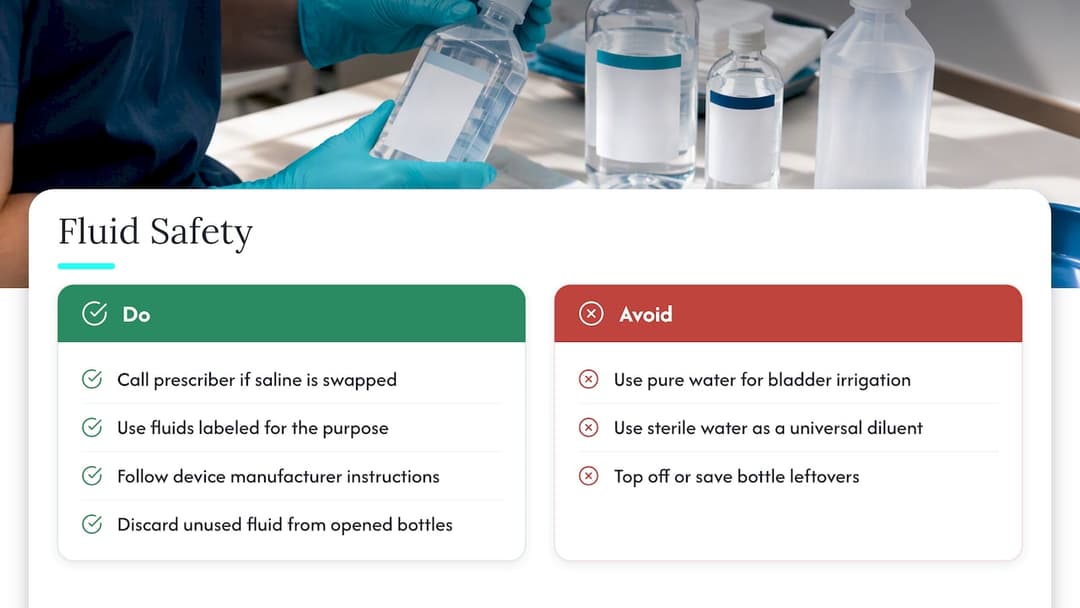
Bladder and urologic irrigation. Pure water can be absorbed through the tissue, and procedures that open venous sinuses, such as transurethral resections, are the classic danger. The FDA label for sterile water notes that hemolysis can follow when hypotonic fluid enters the circulation. A caregiver who finds that a supplier has swapped saline for sterile water on a standing order should call the prescriber before using it. Irrigation fluids used in the urinary tract vary: some resection irrigants, such as 1.5% glycine, are formulated specifically and have their own labeling. Follow what the order and the label state.
Body cavities and deep surgical sites. Use fluids labeled for the purpose.
Injection and intravenous use. Sterile water for injection is not a diluent for everything. It is labeled for use after a solute is added, or as a diluent for specific medications.
Nasal rinses and respiratory devices. Follow device manufacturer instructions. Many nebulizer and humidifier labels call for sterile or distilled water, not saline, and some inhaled medications call for saline. Read the device label.
One more point on bottles. Irrigation containers are single-use. Unused fluid from an opened bottle should be discarded under most facility policies, because an opened bottle can become contaminated. Do not top off or save leftovers.
Buying cheap is fine. Buying blind is not. In November 2023 the FDA warned consumers, providers and facilities not to use recalled saline and sterile water products from Nurse Assist. The products might not be sterile and could carry bacterial contamination. The recall touched bottles, syringes and cups sold under multiple brand names, so a facility could have held affected stock without knowing the original manufacturer.
Buyer’s checklist:
After the fluid debate, the more common error is reaching for an antiseptic. The PSNet review notes a strong consensus against putting cytotoxic agents such as hydrogen peroxide, alcohol or full-strength povidone-iodine directly into open wounds, because they can harm granulation tissue and slow healing.
That does not make them useless. They have a place on intact skin, around a wound or for preparing a site. Our hydrogen peroxide spray and povidone iodine scrub solution are skin and surface products. Our piece on cleaning vs. disinfection vs. sterilization explains which level of processing fits which job. After cleansing, a triple antibiotic ointment is a typical topical step for minor wounds, though a clinician decides for anything beyond minor.
Many readers who search on irrigation also ask about non-stick pads versus gauze, and about brand-name pads such as Telfa versus gauze. They are separate products for separate jobs, so most kits carry both.
| Non-adherent (non-stick) pad | Woven or non-woven gauze | |
|---|---|---|
| Main job | Cover the wound without sticking to it | Absorb, pad, clean around the wound, or pack |
| Best for | Lightly draining wounds, sutured incisions, skin tears, abrasions | Heavier drainage, cushioning, wiping, secondary layer |
| Risk | Limited absorption on its own | Fibers can stick to a drying wound bed and can pull at tissue on removal |
| Typical pairing | Primary layer, held by tape, wrap or secondary dressing | Over a non-stick pad as the absorbent layer, or alone on low-risk areas |
The practical pattern is a non-stick pad against the wound, gauze over it for absorption, and a wrap or tape to hold it. Plain gauze directly on a fresh, weeping wound is the usual way a dressing change turns painful, because the gauze dries into the surface. A non-adherent pad lowers that risk, but a pad on a heavily draining wound will saturate fast, so match absorption to drainage and change on the schedule your protocol sets.
For retention, a self-adherent bandage holds layers without tape on skin. For minor cuts and scrapes, a sterile adhesive bandage is enough. The wider selection logic is in our wound care supply selection guide.
We supply clinics, hospitals and individual practitioners, and the same pattern comes up in purchasing conversations. Buyers spend their energy debating water against saline and too little on whether the whole wound kit is consistent.
Our view:
This is our reading of the evidence and of how buyers use these products. It is not clinical direction for any individual patient.
— QB
If you are building or refilling a wound care station, we carry wound care, PPE, disposables and instruments for both wholesale and retail buyers, shipped across the Americas. Browse the full range at Queens Surgical, or see our surgical suite consumables procurement guide to plan a standing order by category. If you are not sure which product fits a protocol, our team can help with product and regulatory questions before you buy.
Saline is the safer default because it is isotonic and gentle on tissue. For an acute, minor wound, trials found no significant difference in infection between tap water and saline, so clean running potable water is a reasonable option. For deep wounds, surgical sites or vulnerable patients, use sterile saline and follow clinical guidance.
Only for uses where the label and your protocol allow it. For surface rinsing of a minor wound it is generally tolerated, but it is hypotonic and not suited to body cavities, bladder irrigation or any procedure where fluid can be absorbed. When in doubt, ask the prescriber or pharmacist before substituting.
Because saline matches the body’s salt balance, so it avoids pulling water into cells. Experts also note that hospital preference reflects isotonicity and wide availability more than proven superior infection control over tap water for simple wounds.
We would not rely on a homemade solution for anything beyond a minor rinse. Home mixtures cannot be verified as sterile or correctly concentrated. For a minor wound, clean running tap water is better supported than a homemade solution. For anything else, use a commercially labeled sterile product, or seek care.
What CDC, OSHA, AORN and WHO say about double gloving, when to do it, how to don two pairs, and what procurement teams should stock for compliance.
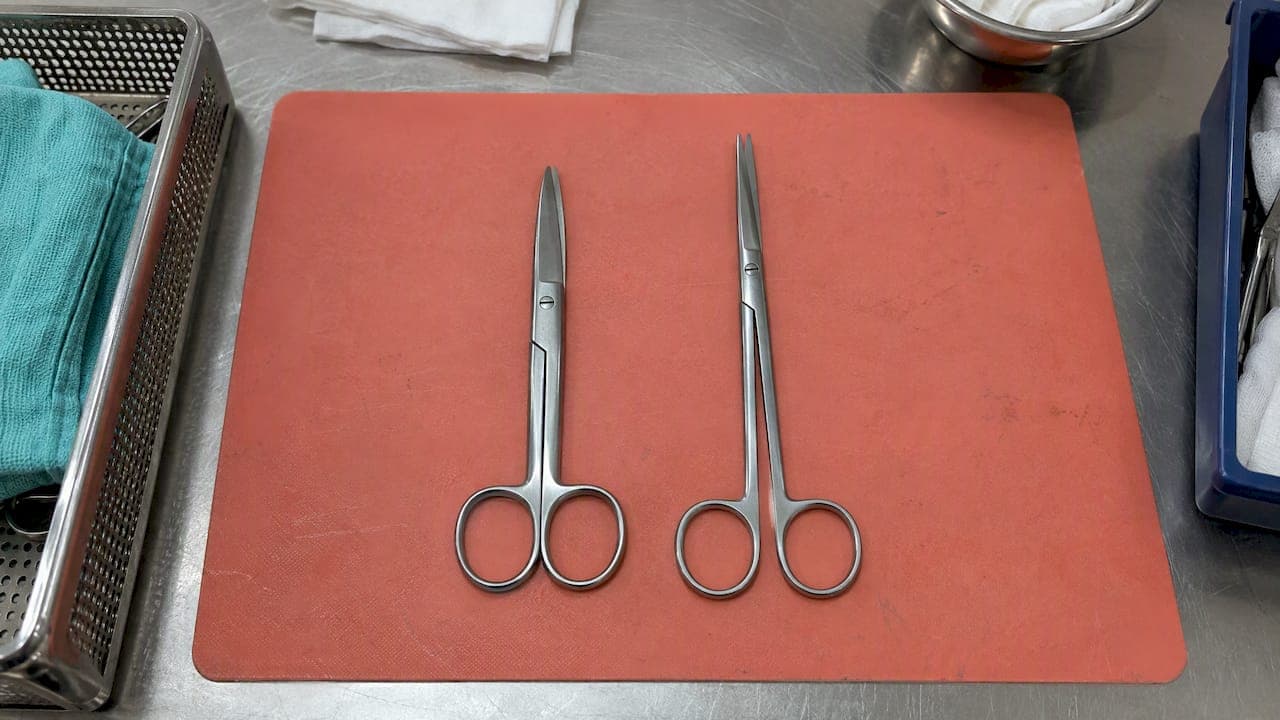
Mayo and Metzenbaum scissors look alike but do different jobs. See how blades, shanks and tips differ, when to use each, and how to care for them.
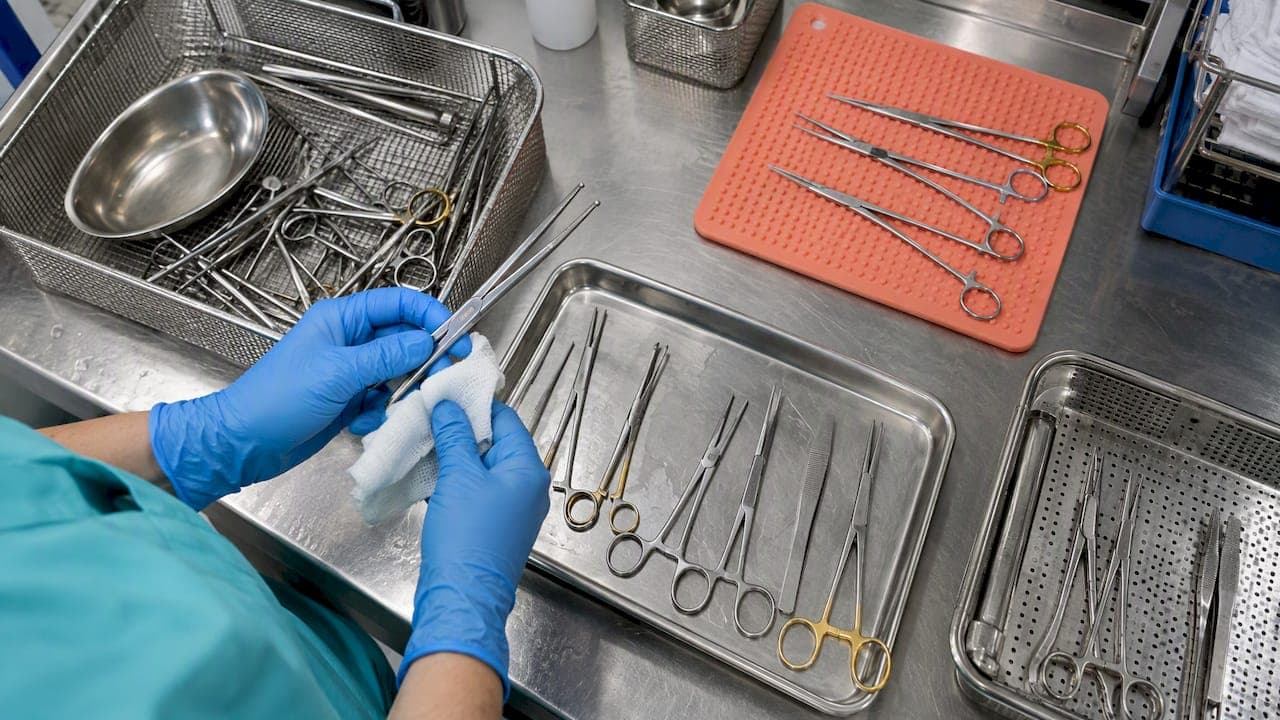
Thumb vs locking, toothed vs smooth, Adson vs DeBakey, dressing vs tissue forceps: how each type works, when to use it and how to buy and reprocess…