
Double Gloving Guidelines: What U.S. Teams Should Follow
What CDC, OSHA, AORN and WHO say about double gloving, when to do it, how to don two pairs, and what procurement teams should stock for compliance.
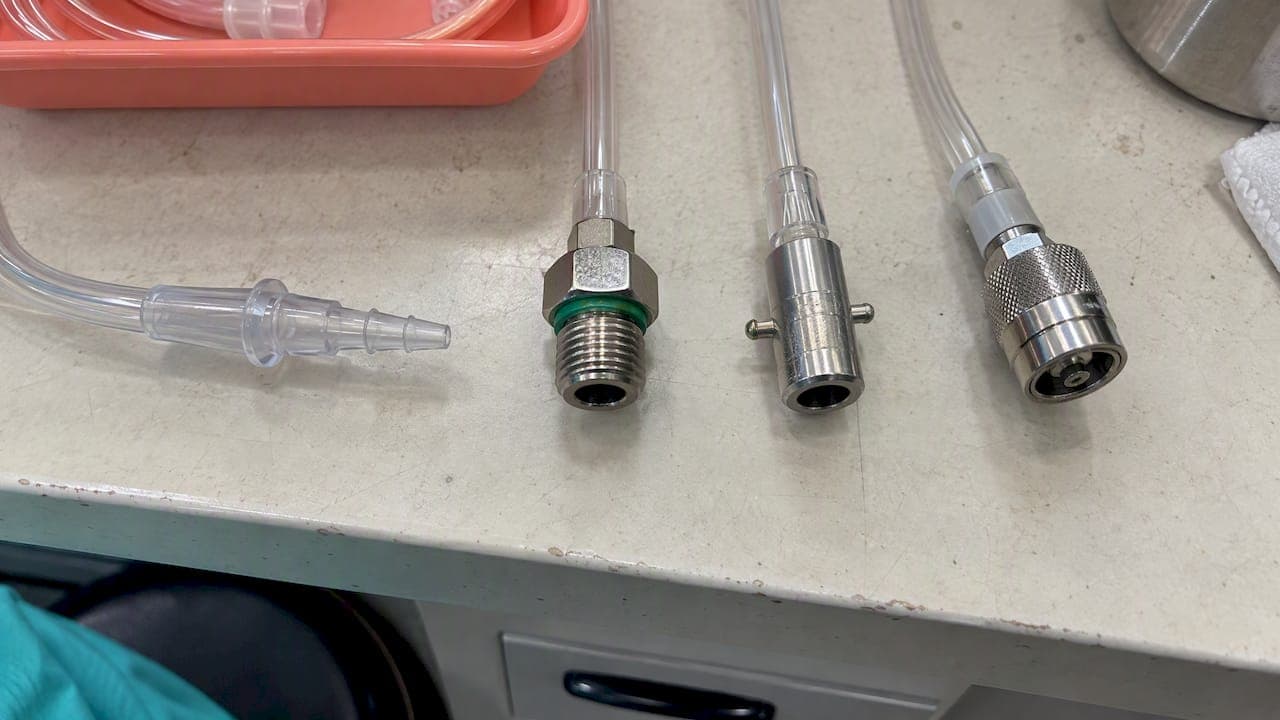
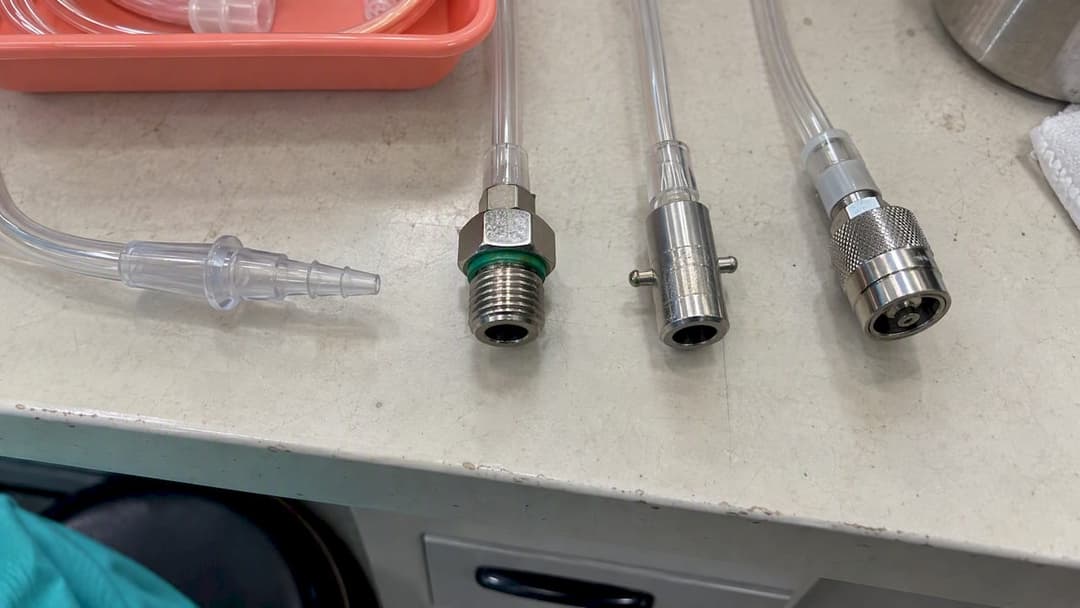
Most buyers need one of three connector families: tapered barbed fittings, DISS threaded fittings, or a manufacturer-specific quick-connect, and the fastest compatibility check is to measure your tubing or read the port label on your device. Standards such as ISO 80369-2 and FDA/NIOSH guidance shape safe use, and keep every connector free of oil and grease. We stock tubing at Queens Surgical.
TL;DR:
Find Oxygen Supplies for Your Setup
Browse Queens Surgical’s medical products, including tubing, to help source supplies for healthcare professionals and facilities.
There is no single universal oxygen connector, which is why mismatched parts are the most common ordering mistake. Three families cover most of what you will meet:
If you are unsure which family you have, read the label on the device port before ordering anything.
Compatibility comes down to measurement and labels. Work through it in this order:
If your measurements fall between two sizes, do not force the fit. A connector that has to be forced is a connector that will leak or slip. Send us the device model and we can help you find a suitable part.
Tubing material and construction affect comfort, durability and how long a connection stays seated. There is no universal color standard, so green or clear tubing tells you about the manufacturer, not about the gas or the fit. Always read the product description rather than relying on color.
Follow these steps each time you set up or change a connection:
FDA and NIOSH advise that plastic crush-type gaskets of the CGA 870 style are single-use. Use the gasket specified by the regulator manufacturer, tighten by hand only, and never reuse one.
Pro Tip: Keep a spare connector and a fresh gasket next to the equipment so a worn part never means going without oxygen.
Oxygen does not burn on its own, but it makes everything else burn faster. Institutional safety guidance is blunt about the top rule:
Never use oil, grease, or petroleum-based products on oxygen connectors or tubing, because oxygen is an oxidizer and these substances can ignite in an oxygen-rich atmosphere. (Princeton EHS)
At home, oxygen use increases fire risk. An analysis by CDC and academic researchers reports fire and burn incidents tied to home oxygen and notes that oxygen-enriched air makes fabrics and cosmetics ignite more easily. Keep smoking, candles and open flames away from oxygen equipment.
On the standards side, ISO 80369-2 sets design and dimensions for small-bore connectors used in respiratory applications, which is meant to keep incompatible connectors from being joined by accident. Clinics that manage appointments around respiratory care can also lighten the administrative load with a service such as telephone answering for pulmonologists, leaving staff free to focus on equipment and patients.
Use this list to order the right parts the first time:
We fill retail orders as well as wholesale orders, and our team can help you narrow the selection when you are unsure.
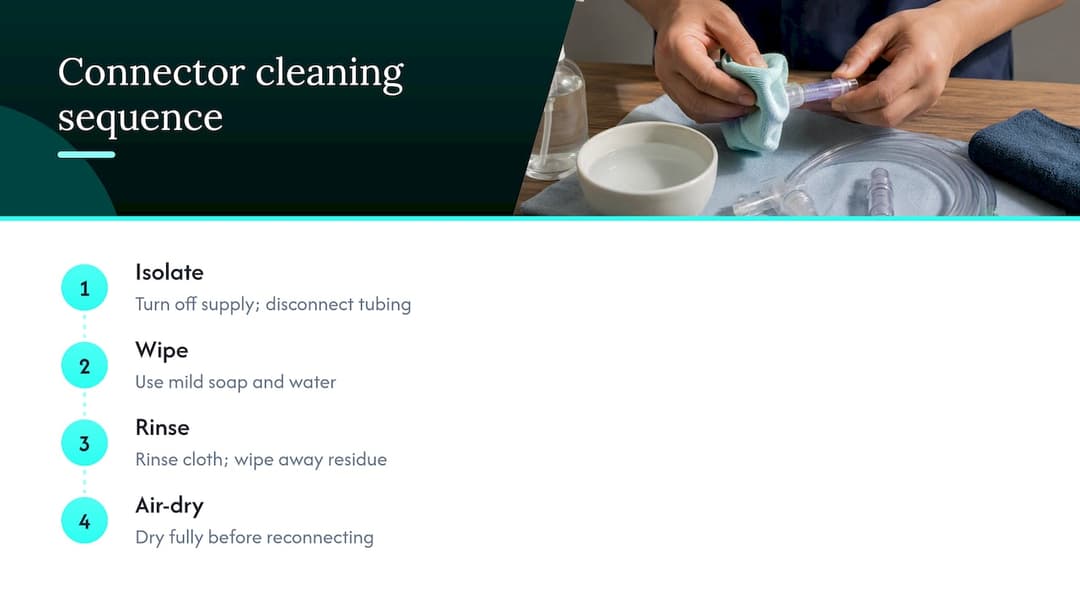
Clean connectors protect both hygiene and the quality of the seal. Start by turning off the oxygen supply and disconnecting the tubing from the source. Wipe the outside of connectors and tubing with a soft cloth dampened with mild soap and water, then rinse the cloth and wipe again to remove residue. Let every part air dry completely before reconnecting. Never use oil-based cleaners, lotions or lubricants anywhere near oxygen equipment, and avoid harsh solvents that can cloud or crack plastic.
Check each connector while you clean. Look for cracks around the barbs, stretched ends that no longer grip, thread damage on DISS fittings, and cloudy or sticky tubing. A fitting that once required firm pressure to seat but now slides on easily is worn.
Build a simple routine: a quick visual check at every setup, a wipe-down weekly, and a full replacement schedule based on the manufacturer’s guidance and your facility’s policy. Tubing that is discolored, brittle or visibly dirty inside should be replaced rather than cleaned. For nasal cannulas, replace them on the schedule the supplier recommends, and keep spares of our flared-tip or standard-tip cannulas on hand so replacement is never delayed.
Start with the simplest cause. If a connection hisses or the user notices reduced flow, turn off the supply and reseat each joint. Push tapered tubing fully over the barbs and confirm it sits flush. If tubing slides off easily, the fit is wrong: the tubing may be stretched, or the barb and tubing sizes may not match, so remeasure ID and OD.
For threaded DISS fittings, check that threads are clean, undamaged and hand-tightened. A visibly worn or deformed gasket should be replaced with the gasket the regulator maker specifies. Do not overtighten or use tools beyond what the manual allows, and never reuse a single-use crush gasket.
Other common faults and quick fixes:
When a leak persists after reseating and replacing the part, stop using that component. Swap in a spare, and contact the device supplier or a clinician if the problem points to the equipment itself.
Standards exist so that connectors do what their labels say. For small-bore respiratory connectors, the reference to know is ISO 80369-2, which specifies design and dimensions and separates connector types intended for different pressure ranges, labeled R1 and R2. The FDA lists it among its recognized consensus standards for medical devices, a useful signal that regulators treat it as relevant.
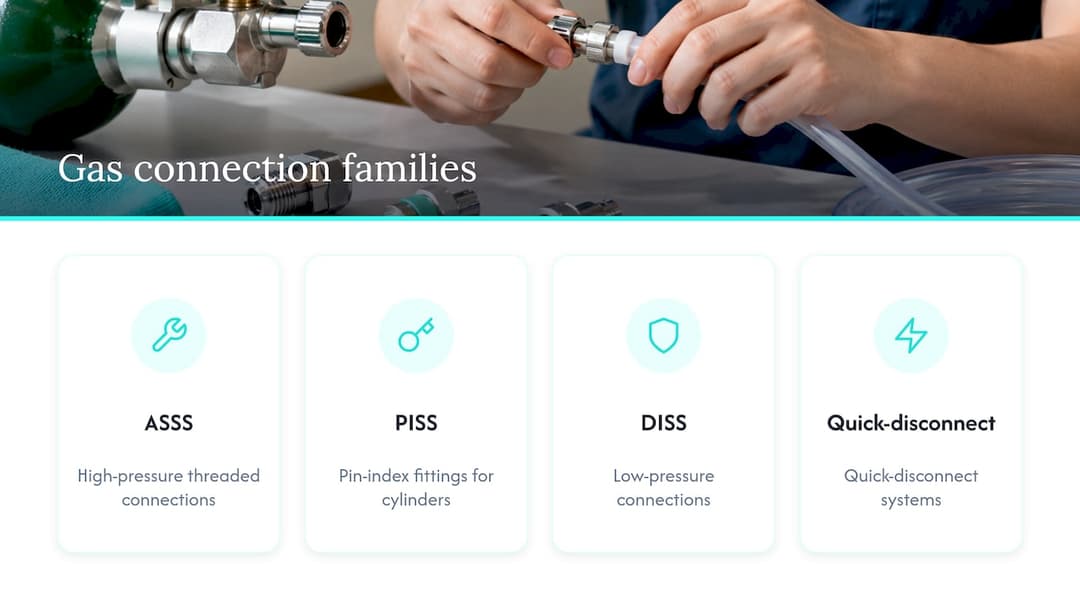
Gas connection indexing adds another layer. The Undersea & Hyperbaric Medical Society describes the families in use: ASSS for high-pressure threaded connections, PISS pin-index fittings for cylinders, DISS for low-pressure connections, and quick-disconnect systems. These systems use different connection styles; check the device and connector documentation to confirm compatibility.
What does this mean when you shop? Ask the supplier which connector family and standard a product follows, check that the stated sizes match your device, and favor products with clear labeling and documentation. A part that cannot tell you what it connects to is a part you should skip. Because many quick-connect designs are manufacturer-specific, standards do not make every connector interchangeable, so verifying the fit remains your job.
Most connector problems come from skipped measurements, not defective parts. Put safety-certified parts and spare connectors ahead of saving a few dollars, and verify every fit before it matters.
— QB

When you need the right fit without the guesswork, we offer oxygen supply tubing and accessories for retail and wholesale orders alike. Browse our respiratory catalog at Queens Surgical to compare tubing, cannulas and inline accessories, then add spare connectors or a box quantity if you run a clinic. Ordering from us keeps selection, availability and support in one place, so a replacement part is never a scramble. Check availability today and put your order in.
This article is general information, not a substitute for advice from a qualified doctor. Consult a qualified healthcare professional about your own circumstances before acting on anything here.
There is no universal color standard, so the color mainly reflects the manufacturer or product line. Check the product description for size, material and connector type rather than relying on color alone.
Use a male-to-male connector sized for your tubing: push each tubing end fully over the barbs until it sits flush. Confirm there are no leaks before use.
Tapered barbed fittings are most common for smooth-bore tubing, with DISS threaded fittings and manufacturer-specific quick-connects on flowmeters and outlets. Match the family printed on your device, as many quick-connects are not cross-compatible.
Keep the oxygen source and connectors dry and away from direct water spray, and ask the prescribing clinician for guidance on bathing. Ensure long tubing is routed so it cannot tangle or be stepped on.
What CDC, OSHA, AORN and WHO say about double gloving, when to do it, how to don two pairs, and what procurement teams should stock for compliance.
Mayo and Metzenbaum scissors look alike but do different jobs. See how blades, shanks and tips differ, when to use each, and how to care for them.
Sterile water or saline? Learn the difference in tonicity, safe uses, wound irrigation evidence, and how to choose irrigation and dressing supplies.