Double Gloving Guidelines: What U.S. Teams Should Follow
What CDC, OSHA, AORN and WHO say about double gloving, when to do it, how to don two pairs, and what procurement teams should stock for compliance.
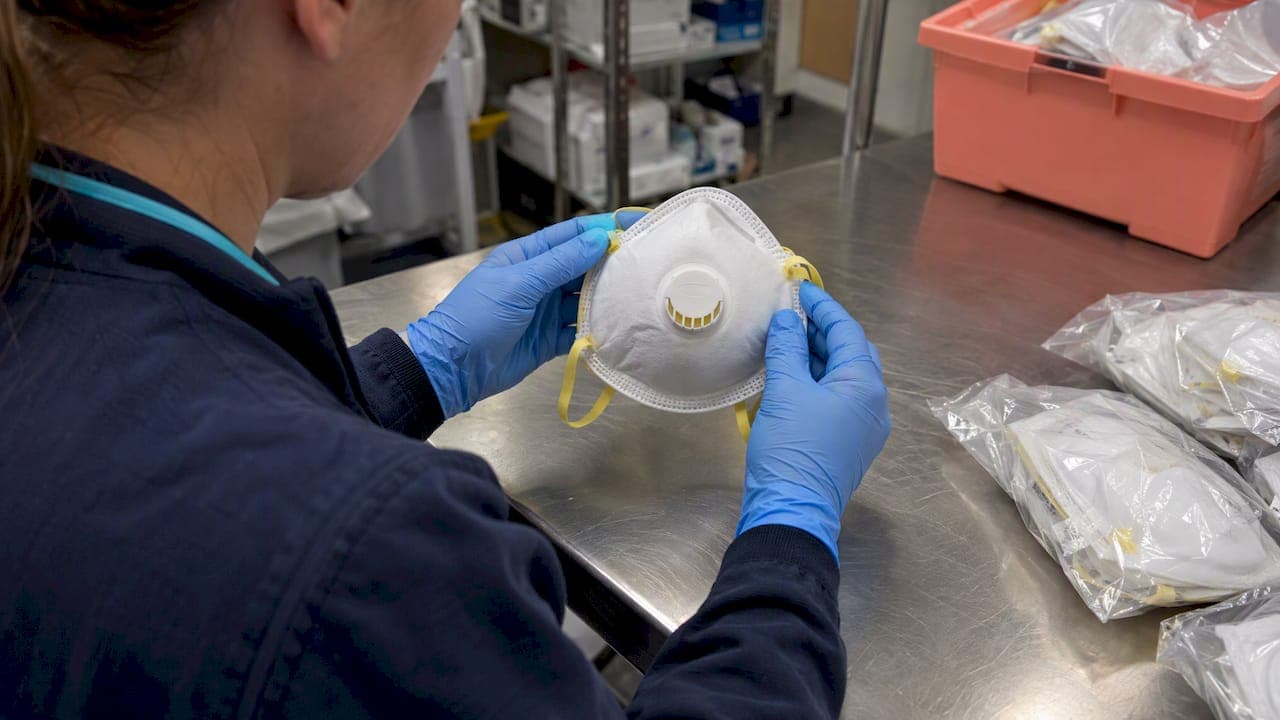
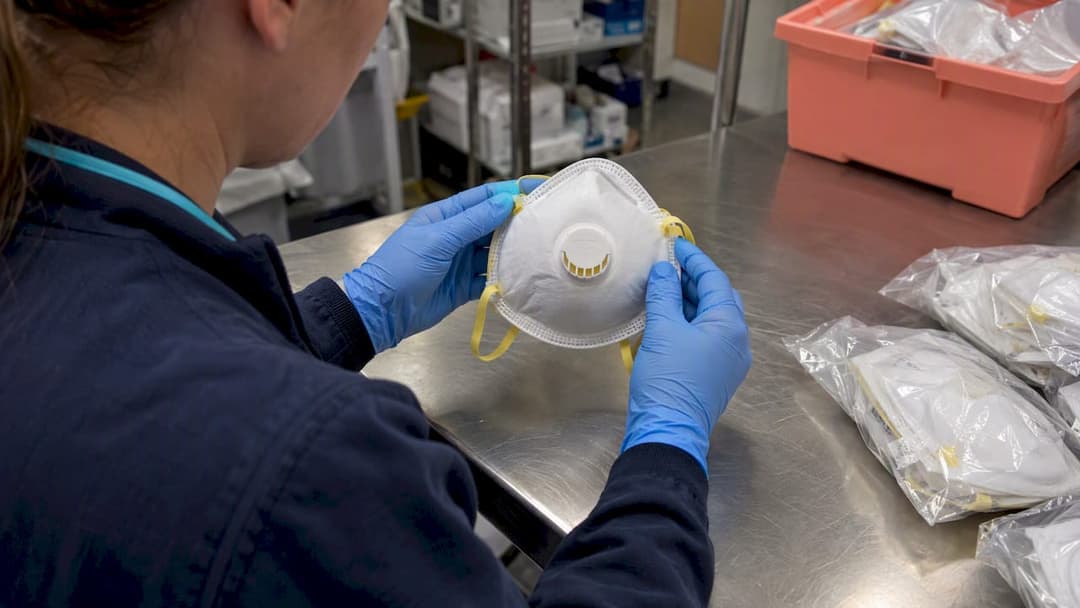
Valved N95 respirators are not acceptable for most patient-facing clinical care because the valve allows unfiltered exhaled air to escape, undermining source control for the people around the wearer. CDC and NIOSH guidance recommends non-valved or surgical N95s for direct patient care, with valved respirators limited to documented exceptions. If valved stock is still on your approved list, pull it now and start sourcing replacements.
TL;DR:
Source Medical Supplies With Confidence
Browse Queens Surgical’s medical products and equipment for clinics, hospitals, healthcare professionals, and procurement teams across the Americas.
Safety managers do not need a research review to act. The immediate work is swapping what is on the shelf and what is written into policy.
Document the policy change in your respiratory protection program so auditors and staff see a clear, dated decision rather than an informal practice shift.
An N95’s filtering material protects the wearer by capturing particles on inhalation. The valve exists to make exhaling easier, and on valved models, exhaled air passes through a one-way flap rather than through the filter media. That is a comfort feature, not a flaw in the mask’s inward protection, but it breaks source control.
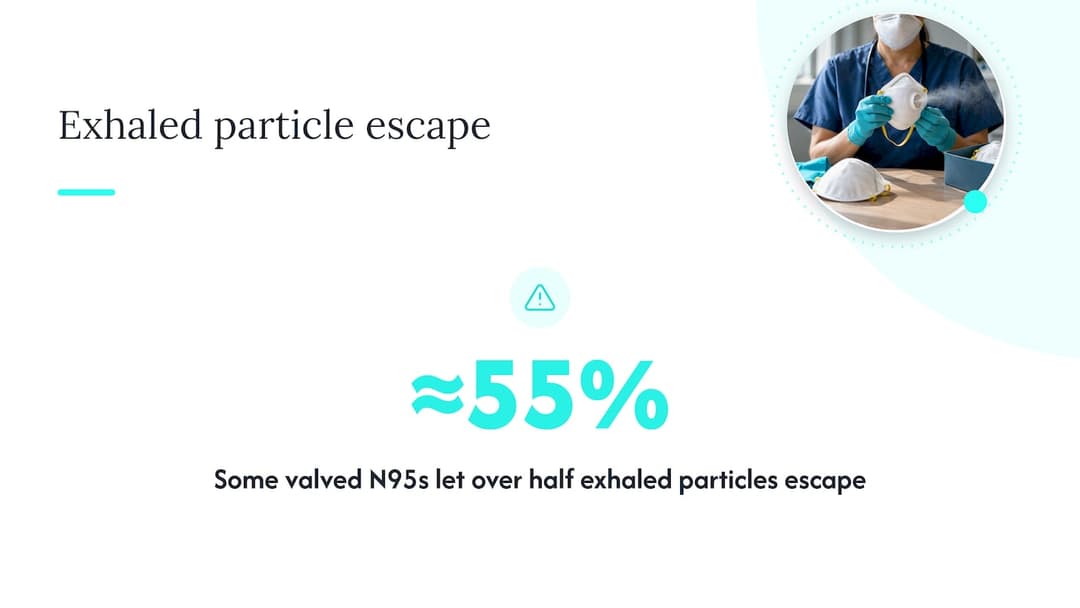
Outward particle penetration varied widely across tested models, from less than 1% up to about 55%, according to NIOSH respirator testing. That range matters: some valved respirators came close to surgical-mask-level containment, while others let more than half of measured particles escape unfiltered. Comfort gains from reduced heat and humidity build-up are real for workers in long shifts or hot environments, but they do not substitute for containing a wearer’s own respiratory output in a room with patients.
Three federal bodies shape this decision, and each governs a different piece of it.
None of these agencies ban valved N95s outright. They narrow the conditions under which valved units are appropriate, which is why policy language, not just purchasing, needs to change.
When a valved respirator is genuinely the only unit on hand, mitigation reduces but does not eliminate the source-control gap.
Covering or modifying a valve can increase breathing resistance and inspired carbon dioxide, and it may void the unit’s NIOSH approval, according to a NIOSH evaluation of covered exhalation valves. Document any such exception in your respiratory protection program, limit use to a single shift, and keep a supervisor aware when the wearer will be present for aerosol-generating procedures.
Pro Tip: Train staff to fit-check after covering the valve, not before, since the added layer changes the seal.
Source control is less critical where the wearer has little or no contact with patients. Valved N95s can be acceptable in these settings with the right controls in place.
Pair these exceptions with signage, restricted access to clinical corridors, and a trigger to re-evaluate the policy during outbreaks or patient surges. As soon as non-valved supply allows, shift even these roles to standard N95s to keep the exception list small.
RFP and purchasing language should close the loopholes that let valved stock slip back onto clinical floors.
| Checklist item | What it confirms |
|---|---|
| NIOSH approval number on file | Unit meets federal certification |
| ASTM F1862 clearance documented | Fluid resistance for surgical use |
| Fit test and seal check records | OSHA 1910.134 compliance |
| Supplier lot traceability | Audit trail for recalls or complaints |
This language gives safety managers a paper trail when regulators or accreditation bodies ask why a given respirator is or is not in clinical use. A documented OSHA fit-testing workflow and an exposure-control plan template from MyLTC Apps both help long-term care and acute settings build this record without starting from a blank page.
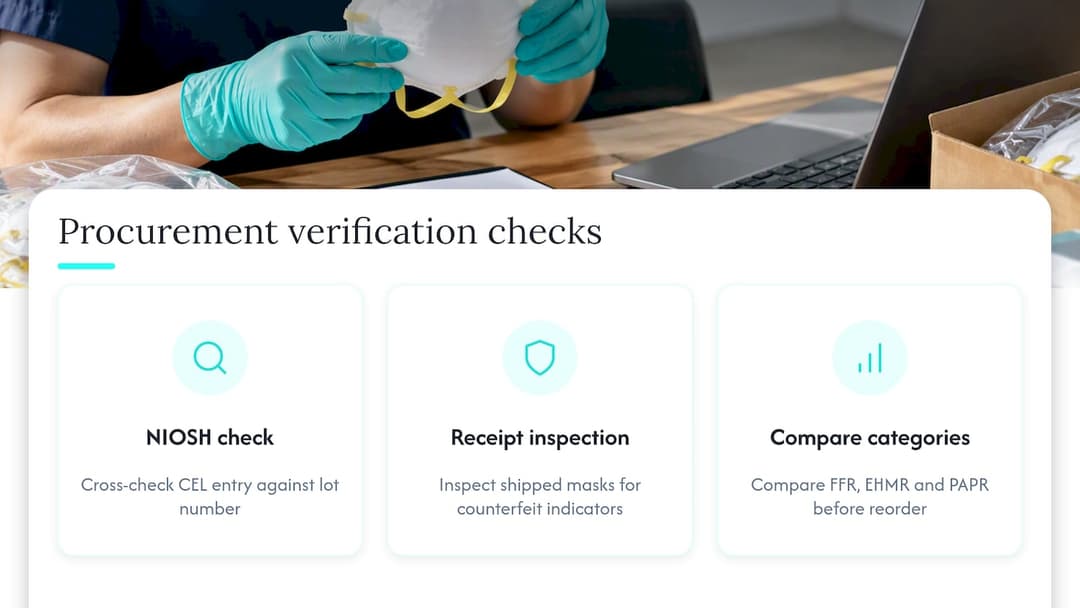
We built verification resources specifically for procurement teams working through this exact decision. Our guide to verifying NIOSH N95 certification walks through cross-checking the NIOSH Certified Equipment List against a lot of number in under a minute, and our guide to spotting counterfeit N95s covers what to check at receipt. Our respiratory care equipment guide breaks down FFR, EHMR, and PAPR categories so buyers can compare alternatives before committing to a reorder.
Facilities that pulled valved N95s from patient units usually did it after a fit-test audit turned up units with no documented source-control exception. Align your written policy with CDC and NIOSH guidance before an audit forces the decision, and log every temporary exception with a date and an owner.
— QB
We offer a selection of N95 respirators suitable for direct patient care, along with PPE and medical disposables to assist procurement teams in replacing valved stock without a supply gap.
Request a quote or check current respiratory supply availability at Queens Surgical.
A standard N95 primarily protects the wearer by filtering inhaled air, while a non-valved N95 also offers meaningful source control by filtering exhaled air. A valved N95 keeps that inward protection but lets exhaled air bypass the filter, which is why it is not recommended for source control in patient care.
Surgical N95s cleared by the FDA under fluid-resistance testing (ASTM F1862) are the category to look for when source control and splash protection both matter. Check the specific NIOSH approval number and manufacturer documentation for any unit before purchase rather than relying on country-of-origin labeling alone.
NIOSH-approved N95 respirators go through a formal U.S. certification process, while KN95 masks follow a Chinese standard and are not NIOSH-approved. For U.S. healthcare settings, an approved N95 is the standard choice, and buyers should verify approval against the NIOSH Certified Equipment List before purchase.
Airborne precautions call for a fit-tested, NIOSH-approved respirator, typically an N95 or higher, rather than a surgical mask. Under OSHA’s respiratory protection standard, staff must complete a fit test and user seal check before relying on that respirator for airborne precautions.
Covering a valve’s interior with an ECG pad or surgical tape reduces but does not eliminate outward particle emission, and it should be treated as a documented exception rather than routine practice. Because covering a valve can affect fit and breathing resistance, perform a new user seal check afterward and limit use to situations where no non-valved respirator is available.
What CDC, OSHA, AORN and WHO say about double gloving, when to do it, how to don two pairs, and what procurement teams should stock for compliance.
Mayo and Metzenbaum scissors look alike but do different jobs. See how blades, shanks and tips differ, when to use each, and how to care for them.
Sterile water or saline? Learn the difference in tonicity, safe uses, wound irrigation evidence, and how to choose irrigation and dressing supplies.