Double Gloving Guidelines: What U.S. Teams Should Follow
What CDC, OSHA, AORN and WHO say about double gloving, when to do it, how to don two pairs, and what procurement teams should stock for compliance.
Single use remains the safe default for N95 respirators in routine care, but the Centers for Disease Control and Prevention, the Occupational Safety and Health Administration, and the National Institute for Occupational Safety and Health all recognize extended use and limited reuse as acceptable contingency strategies during shortages. Extended use is preferred over limited reuse because it involves less handling. Respirators must be discarded immediately if soiled, damaged, used during an aerosol-generating procedure, or if a user seal check fails, and every facility needs a written respiratory protection program with seal checks on every donning.
TL;DR:
Source Respiratory Supplies for Your Facility
Queens Surgical supplies medical products and equipment for healthcare facilities, including masks and other essentials for infection control.
These three terms describe different handling patterns, and mixing them up in policy language creates confusion at the bedside.
Aerosol-generating procedures change the calculus entirely: a respirator worn during intubation or bronchoscopy should be treated as contaminated and discarded afterward, regardless of which general policy a facility follows. Precise wording matters because “reuse” and “extended use” carry different infection control risks, and a policy that conflates them can mislead staff about when removal and inspection are required.
Four federal bodies shape how U.S. facilities handle respirator conservation, and their guidance works together rather than in isolation.
Reconciling these sources in facility policy means documenting which scenario applies: routine care defaults to single use, a declared shortage triggers the extended-use and limited-reuse provisions, and any decontamination step must match an FDA-authorized or locally validated method tied to the exact respirator model. Infection control teams should keep a written log showing which guidance tier is active, since OSHA inspectors and accreditation surveyors will ask for that justification during a shortage period.
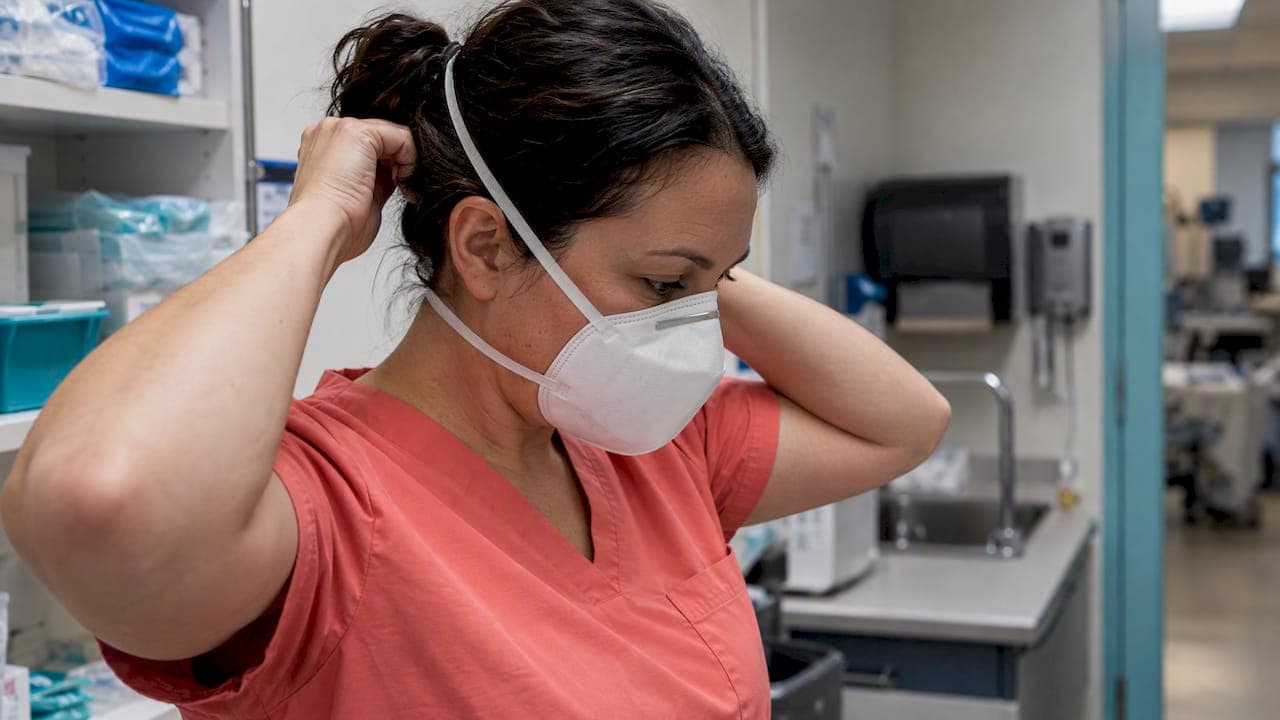
Handling technique determines whether extended use or limited reuse stays safe. Follow this sequence for every donning:
A PPE donning and doffing guide walks through the full sequence with more detail for teams building out training materials.
Pro Tip: Minimize strap adjustments and avoid applying moisturizers or cosmetic creams near the seal area, since both accelerate the loosening of the fit over repeated donnings.
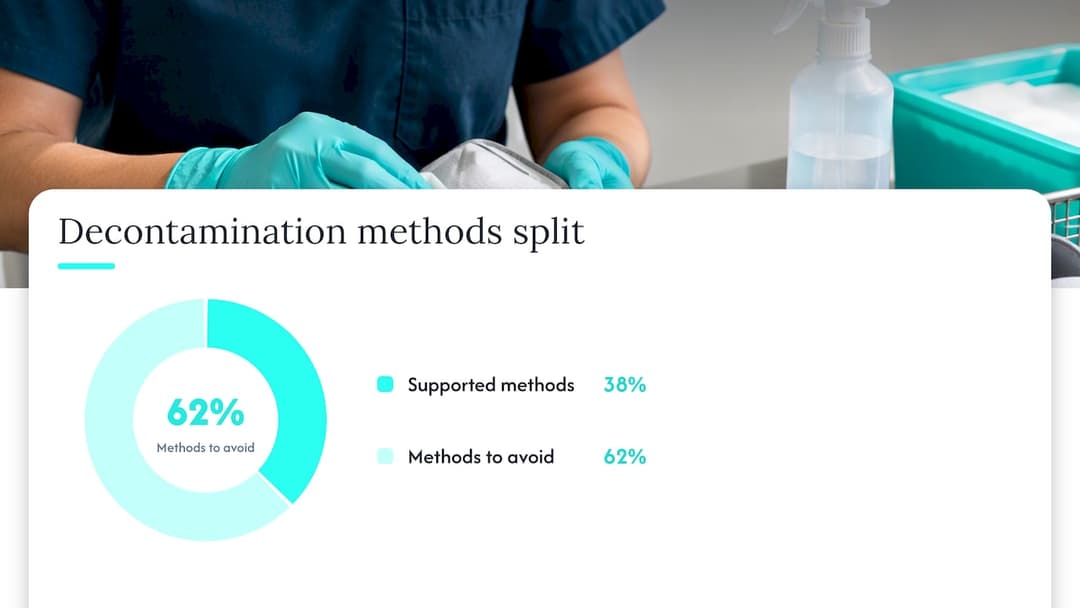
Decontamination is not a routine step, and the evidence supporting it is limited. A systematic review of reprocessing studies found that high-quality evidence for routine decontamination is scarce, that outcomes vary by method and respirator model, and that any reprocessing protocol must be validated locally before use.
Among methods with supporting data, three stand out:
Methods to avoid entirely include alcohol, bleach, autoclaving, dry heat, and ethylene oxide, since these degrade filtration media, leave residual chemicals, or introduce fire risk.
Any decontamination cycle voids the original NIOSH certification. A facility that decontaminates respirators takes on responsibility for its own validation, including filtration testing, post-cycle fit testing, and a tracking system for cumulative cycles per unit.
When burn rate concerns persist, elastomeric half-mask respirators (EHMRs) and powered air-purifying respirators (PAPRs) offer a reusable path. NIOSH guidance on elastomeric and PAPR strategies notes these devices can match or exceed disposable N95 protection, but they require dedicated cleaning schedules, cartridge replacement, and fit testing built into the program.
A NIOSH certification verification guide gives procurement staff a quick way to confirm a model’s approval status before it enters inventory.
Fit failure accumulates with repeated donning, and the rate varies by respirator model rather than following a fixed curve. Peer-reviewed cohort data on repeated N95 use show that fit failure can appear after a single shift and climbs substantially within the first several shifts for many models, which is why agency guidance stops short of recommending a universal reuse count.
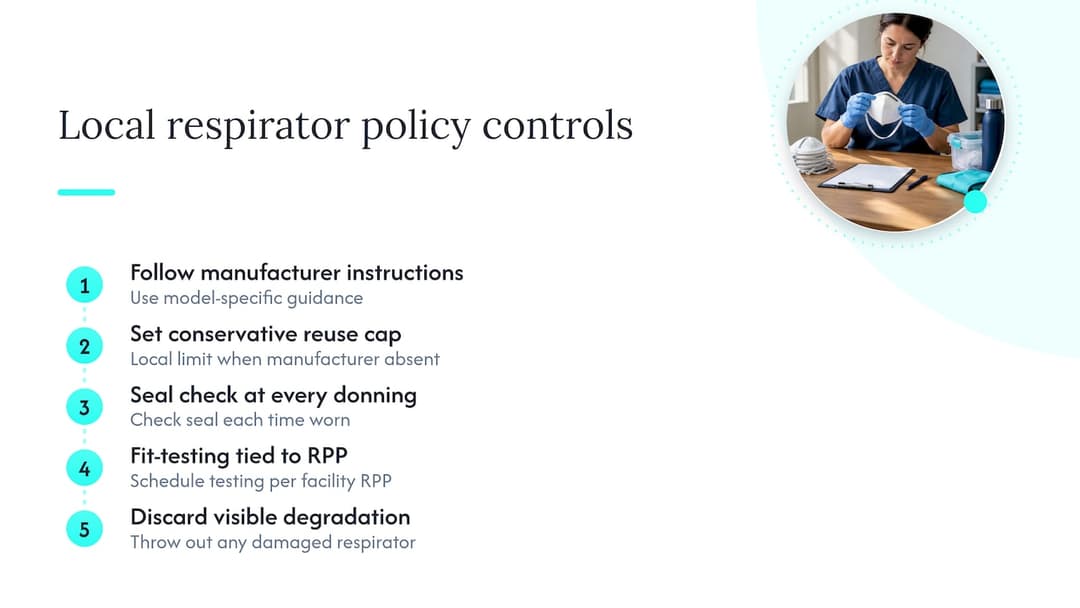
Manufacturer instructions, when available, outweigh any generic number. In their absence, a conservative local cap, paired with a seal check at every donning, a fit-testing cadence tied to the facility’s RPP, and discard triggers for any visible degradation, gives infection control teams a defensible policy without pretending precision the evidence doesn’t support.
Beyond agency guidance, procurement teams need practical tools: confirming NIOSH approval before ordering, checking shelf life on stored stock, and training staff on fit testing. A respirator shelf life guide and fit testing steps cover the verification work that sits behind any reuse or conservation policy.
Reuse protocols exist for shortages, not as a permanent operating model. We’d argue the highest-risk procedures, intubation, bronchoscopy, any aerosol-generating encounter, should never be paired with a reused respirator, full stop. The stronger long-term move is investing in elastomeric respirators and validating any decontamination protocol locally before a crisis forces the decision. Facilities that plan their stockpile now, rather than mid-shortage, protect staff better than any reuse policy can.
— QB
Keeping a respiratory protection program running smoothly starts with reliable inventory, not improvisation. We stock respiratory supplies and medical equipment for clinics, hospitals, and procurement teams across the Americas, with both retail and wholesale ordering built for facilities that need to restock quickly or plan a larger reserve.
For facilities also building out broader stockpile and logistics planning, this healthcare inventory management guide covers the warehousing and distribution side of supply resilience.
This article is general information, not a substitute for advice from a qualified doctor. Consult a qualified healthcare professional about your own circumstances before acting on anything here.
There’s no single approved number; it depends on the manufacturer’s instructions and the respirator model. When no manufacturer guidance exists, CDC data suggest capping reuse at no more than five donnings, paired with a seal check before each use.
Staff must complete a medical evaluation and annual fit testing for the specific respirator model before first use. A user seal check is also required at every single donning, not just the initial fitting.
Change it immediately if it becomes soiled, wet, damaged, or difficult to breathe through, and always after an aerosol-generating procedure. Outside of declared shortages, routine practice treats the N95 as single-use, discarded after each patient encounter.
Perform hand hygiene immediately after doffing, since the outer surface may carry contamination even when removal technique is correct. Store the respirator in a labeled, breathable container only if your facility’s policy permits limited reuse for that encounter type.
What CDC, OSHA, AORN and WHO say about double gloving, when to do it, how to don two pairs, and what procurement teams should stock for compliance.
Mayo and Metzenbaum scissors look alike but do different jobs. See how blades, shanks and tips differ, when to use each, and how to care for them.
Sterile water or saline? Learn the difference in tonicity, safe uses, wound irrigation evidence, and how to choose irrigation and dressing supplies.